





Abstract
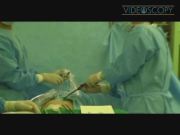
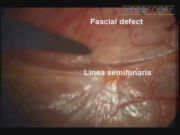
Spigelian hernia is an intraparietal hernia of the anterior abdominal wall occurring through the spigelian aponeurosis that accounts for 2% of all abdominal wall hernias. Traditionally, spigelian hernias have been managed by an open surgical approach with suturing and direct tissue approximation or mesh repair. The aim of this video is to demonstrate the feasibility of a single incision laparoscopic totally extraperitoneal approach for the treatment of spigelian hernia. A 62-year-old woman complained of a bulge on the left side of her abdomen that was present for 6 months. A fascial defect was detected along the lateral border of the rectus muscle. Abdominal computed tomography showed a fascial defect that was identified as spigelian hernia. The patient was scheduled for single incision laparoscopic total extraperitoneal (TEP) repair. A 3 cm vertical incision was made through the umbilicus and a SILS Multiple Instrument Access Port (Covidien, Mansfield, MA) was placed in the preperitoneal space. A 5-mm-diameter endoscopic camera and straight laparoscopic instruments were used through three 5 mm access channels. The fascial defect was found after exploration along the preperitoneal space. Mesh was used to close the defect through the 12 mm channel without suturing. After 6 months, the umbilical scar had nearly disappeared and the patient had no complaints regarding symptoms and recurrence. Single incision laparoscopic TEP repair of spigelian hernia is feasible, but further experiences are needed for this technique to be considered as a standard treatment option.
Runtime of video: 2 mins 47 secs

Keywords
Get full access to this article
View all access options for this article.
Supplementary Material
Please find the following supplemental material available below.
For Open Access articles published under a Creative Commons License, all supplemental material carries the same license as the article it is associated with.
For non-Open Access articles published, all supplemental material carries a non-exclusive license, and permission requests for re-use of supplemental material or any part of supplemental material shall be sent directly to the copyright owner as specified in the copyright notice associated with the article.
