





Abstract
Introduction:
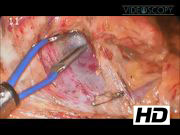
With the widespread use of imaging studies, symptomatic or asymptomatic low potential malignant and benign pancreatic diseases are more frequently diagnosed. Surgical resection may be indicated. 1 At present, parenchyma sparing pancreatectomy is the recommended surgical procedure to avoid the long-term endocrine and exocrine pancreatic insufficiency encountered with major pancreatic resections, 2 especially if the patient is young. In the past, middle pancreatectomy (MP) was considered a complicated surgical procedure due to the extensive dissection along the mesenterico-portal vein and celiac trunk collaterals and the presence of two pancreatic cut surfaces, increasing the risk of pancreatic fistula (PF) and bleeding. Although laparoscopy is now extensively used in the field of pancreatic surgery and has become the routine approach for distal resections, the laparoscopic approach has rarely been described for MP. We report and illustrate our experience with a video of laparoscopic middle pancreatectomy (LMP) for small branch duct intraductal papillary mucinous neoplasia (IPMN) diagnosed after numerous incidents of acute pancreatitis, and we describe our results in 21 patients who underwent this procedure.
Patients and Methods:
Our surgical technique has already been described in detail
3
and well explained in the video. Between April 2011 and May 2014, among 217 patients who had laparoscopic pancreatic resection in our department, 21 underwent LMP, including 15 women (71%). The mean age was 45 (17–75) years and the body mass index was 26 (22–32) kg/m2. The laparoscopic approach was proposed to 21/22 patients who were candidates for MP (laparoscopic feasibility rate = 95%). The main indications were neuroendocrine tumors (
Results:
The surgery lasted a median of 191 (120–285) minutes and the mean blood loss was 145 (10–800) mL. Conversion was necessary in one patient (5%). There were no mortalities. Complications occurred in 15 (71%) patients, including mainly PF in 12 (57%), bleeding in 2 (9%), and reintervention in 3 (14%). On histology, the mean length of the resected specimen was 5 (3.5–8.5) cm, the mean number of harvested lymph nodes was 2.4 (0–6), and resection was R0 in 95%. The mean hospital stay was 17 (14–54) days. After a mean follow-up of 23 (2–34) months, all patients were still alive, there was no tumor relapse and only one patient developed upper limit glycemia (5%).
Conclusion:
Laparoscopic middle pancreatectomy is a safe procedure for nonmalignant pancreatic diseases, and the postoperative outcome is comparable to that of the open approach. This technique can be standardized because most candidates for middle pancreatectomy can theoretically benefit from the laparoscopic approach.
Runtime of video: 7 mins


Get full access to this article
View all access options for this article.
References
Supplementary Material
Please find the following supplemental material available below.
For Open Access articles published under a Creative Commons License, all supplemental material carries the same license as the article it is associated with.
For non-Open Access articles published, all supplemental material carries a non-exclusive license, and permission requests for re-use of supplemental material or any part of supplemental material shall be sent directly to the copyright owner as specified in the copyright notice associated with the article.
