





Abstract
Introduction:
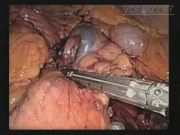
This video presents the case of a laparoscopic distal pancreatectomy and cytojejunostomy takedown. Although this patient had three prior open surgeries, one of which was an unknown pancreatic surgery believed to be a cyst drainage procedure, she could be approached with minimally invasive techniques. 1
Case Report:
The patient is a 54-year-old woman with a surgical history of open cholecystectomy due to recurrent gallstone pancreatitis and then cystojejunostomy for pseudocyst 19 years ago. Of note, before the surgery presented in this video, she did not know what procedure she had undergone and operative records could not be obtained from her old institution. Upon surveillance, she was found to have a 4-cm cystic mass in the tail of her pancreas. Computed tomography (CT) scan with contrast revealed a complex 4-cm cystic structure surrounded by the splenic vessels with close proximity to the splenic hilum. An endoscopic retrograde cholangiopancreatography with stent placement was performed because the patient was found to have a minor pancreatic leak. Fine-needle aspiration of the cyst showed elevated carcinoembryonic antigen level up to 400 μg/mL with mucinous content. Mucinous cystic neoplasm of the tail of the pancreas was suspected. As a result, the patient was scheduled for a minimally invasive distal pancreatectomy and splenectomy.
Results:
The operative time was 120 minutes, the estimated blood loss was minimal, and the length of stay was 7 days without complications. There was a minor pancreatic leak with <20 cc of output per day. The peak amylase level was 4605 and dropped to 1066 within 3 days. The drain tube was removed on postoperative 6th day, but the interventional radiology department placed another pigtail because a follow-up CT showed a small amount of fluid along the posterior abdominal cavity. She was discharged in stable condition and was tolerating a regular diet with good control of her previous diabetes. Her drain had minimal outputs and was removed 2 weeks after discharge. The final pathology showed a mucinous cystic neoplasm with low-grade dysplasia without invasive carcinoma.
Discussion:
Minimally invasive techniques for distal pancreatectomy and splenectomy are feasible even with previous complex pancreatic surgery. The length of stay, duration of narcotics, and time to return to work may be decreased. Longer-term studies are needed to better assess this.
This work was done in association with The Intercontinental Society of Natural Orifice and Endo-Laparoscopic Surgeons (iNOELS).
Runtime of video: 8 mins


Get full access to this article
View all access options for this article.
References
Supplementary Material
Please find the following supplemental material available below.
For Open Access articles published under a Creative Commons License, all supplemental material carries the same license as the article it is associated with.
For non-Open Access articles published, all supplemental material carries a non-exclusive license, and permission requests for re-use of supplemental material or any part of supplemental material shall be sent directly to the copyright owner as specified in the copyright notice associated with the article.
