





Abstract
Introduction:
Caustic esophageal injuries in children are often caused by accidental ingestion. When these injuries result in dense and long esophageal strictures and attempts at dilatation fail after several months, esophageal replacement is indicated.
Materials and Methods:
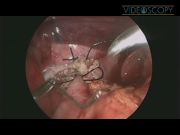
This video depicts the surgical steps of a minimally invasive technique involving thoracoscopic excision of a strictured esophagus and laparoscopic mobilization of the stomach for transposition in a 2-year-old boy with lye injury who failed conservative management. The approach for thoracoscopic esophagectomy with laparoscopic gastric transposition is demonstrated where resection and mobilization of the esophagus is greatly enhanced during thoracoscopy especially since there is extensive scarring of the mediastinum. Among the various esophageal substitutes, we believe that the stomach is an excellent conduit because of its adequate length, good blood supply, and rapid transit. We have utilized this technique in other children with similar injuries with excellent results. 1,2 In addition, once mobilized to the neck, there is only need for a single anastomosis between the cervical esophagus and the transposed stomach. A feeding jejunostomy was also performed at the time of surgery for feeding in the immediate postoperative period.
Results and Conclusions:
The patient tolerated the procedure with no perioperative complications. A contrast study on postoperative day number 7 revealed no leak and a patent esophagogastric anastomosis in the neck. At 1 month postprocedure, he was tolerating all oral feeds, and his jejunostomy feeds were discontinued. He required one dilatation at 2 months postgastric pull-up for an anastomotic stricture. Thoracoscopic esophagectomy with laparoscopic gastric transposition is safe and feasible in children after lye injuries to the esophagus requiring esophageal replacement. 2
No competing financial interests exist.
Runtime of video: 7 mins 42 secs


Get full access to this article
View all access options for this article.
References
Supplementary Material
Please find the following supplemental material available below.
For Open Access articles published under a Creative Commons License, all supplemental material carries the same license as the article it is associated with.
For non-Open Access articles published, all supplemental material carries a non-exclusive license, and permission requests for re-use of supplemental material or any part of supplemental material shall be sent directly to the copyright owner as specified in the copyright notice associated with the article.
