





Abstract
Introduction:
Transhiatal esophagectomy is among the most complex and challenging laparoscopic operations. 1 –3 Owing to limitations of laparoscopic instruments, robotic systems may improve the observation, surgeon dexterity, and resectability of esophageal cancers. 4 –7 This video depicts a robotic transhiatal esophagectomy in a step-by-step manner. The initial results from an initial pilot study at a single institution are presented as well.
Materials and Methods:
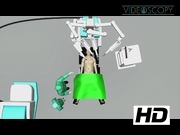
This video presents a step-by-step approach to a total robotic transhiatal esophagectomy procedure performed on a 76-year-old man with an adenocarcinoma arising from the middle part of the esophagus (T3N1). Neoadjuvant treatment was given to the patients with cisplatine, 5-fluoruracil, and radiotherapy. The Da Vinci robotic surgical system model Si (Intuitive Surgical, Sunnyvale, CA) was used for this procedure. Initially, the patient was placed in a 20° reverse-Trendelenburg position with legs apart. After achieving a pneumoperitoneum with a Veress needle, a 12 mm trocar was introduced above the umbilicus and the other trocars were positioned as shown in the video. The distal esophagus is fully mobilized into the chest after incising the esophagophrenic ligament. A mediastinal lymphadenectomy is performed concurrently. The abdominal portion of the procedure continues with division of the short gastric vessels and preservation of the gastroepiploic vessel. The right gastric vessels are preserved and the left gastric vessel is divided. A tube shaped gastroplasty is performed with several linear staplers starting from the lesser curvature. The gastric conduit is then pulled up through a left cervical incision where a hand-sewn “end-to-lateral” esophagogastric anastomosis is performed. The operative time was 210 min.
Results:
The postoperative course was uneventful and the patient was discharged 14 days after the operation. At 2 years follow-up, the patient is still free from recurrence. From 2013 to 2016, a total of eight transhiatal esophagectomies have been performed. There were no conversions to an open or laparoscopic procedure. Mean operative time was 386 min. One patient developed respiratory compromise and there were no reoperations. All surgeries were R0 with a mean of 12.2 resected lymph nodes. All patients are still alive and systemic recurrence occurred in one patient at 28 months from surgery.
Conclusions:
From our earlier experience, robotic esophagectomy is a safe and feasible procedure, especially for the transhiatal approach with a low conversion rate and adequate resected nodes. These results need to be confirmed in a larger series and compared with laparoscopy.
No competing financial interests exist.
Runtime of video: 8 mins 21 secs


Get full access to this article
View all access options for this article.