






Abstract
Introduction:
Ectopic ureter is a rare, congenital disorder that can lead to several complications, including urinary tract infection, hydronephrosis, and incontinence. While these conditions often arise in the pediatric population, some long-term sequelae only become evident in patients as adults. Conventionally, open and laparoscopic approaches have been used for surgical intervention to correct known ureteral anomalies. We aim to demonstrate how robotic assistance can also be used effectively to perform distal ureteroureterostomy for ureteral duplication.
Methods:
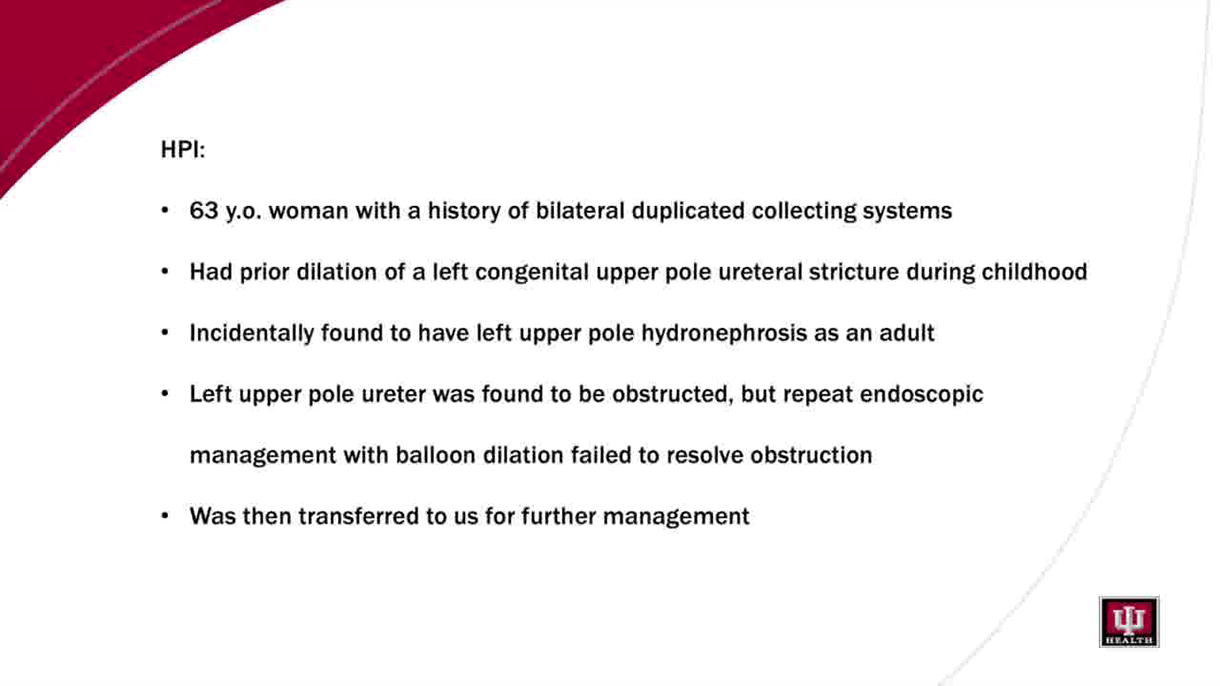
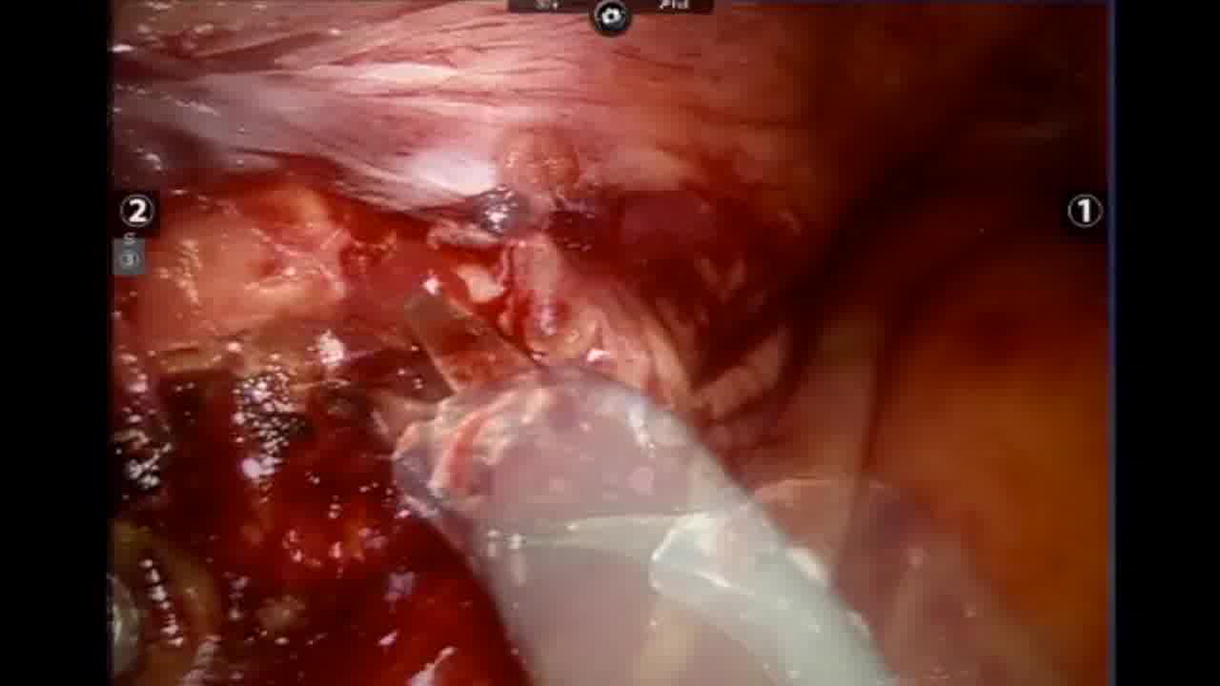
This vignette involves a 63-year-old female with relevant medical history of bilateral duplex kidneys and prior dilation of left congenital upper pole ureteral stricture as a child. She was incidentally found to have upper pole hydronephrosis of the left kidney with a duplicated collecting system. Computerized tomography urogram and retrograde pyelogram confirmed distal obstruction of the upper pole ureter with an anatomically normal lower pole ureter. Initial treatment with balloon dilation was attempted to resolve the ureteral stricture but was ultimately unsuccessful. This resulted in referral to our tertiary center for further management. We performed a voiding cystourethrogram that demonstrated no evidence of vesicoureteral reflux from the left duplex kidney and a MAG3 renal lasix scan that demonstrated contributory function from both the upper and lower poles of the left duplex kidney. Thus, we elected to perform a robotic end-to-side ureteroureterostomy for this patient, where the left upper pole ureter was anastomosed to the ipsilateral lower pole ureter.
Results:
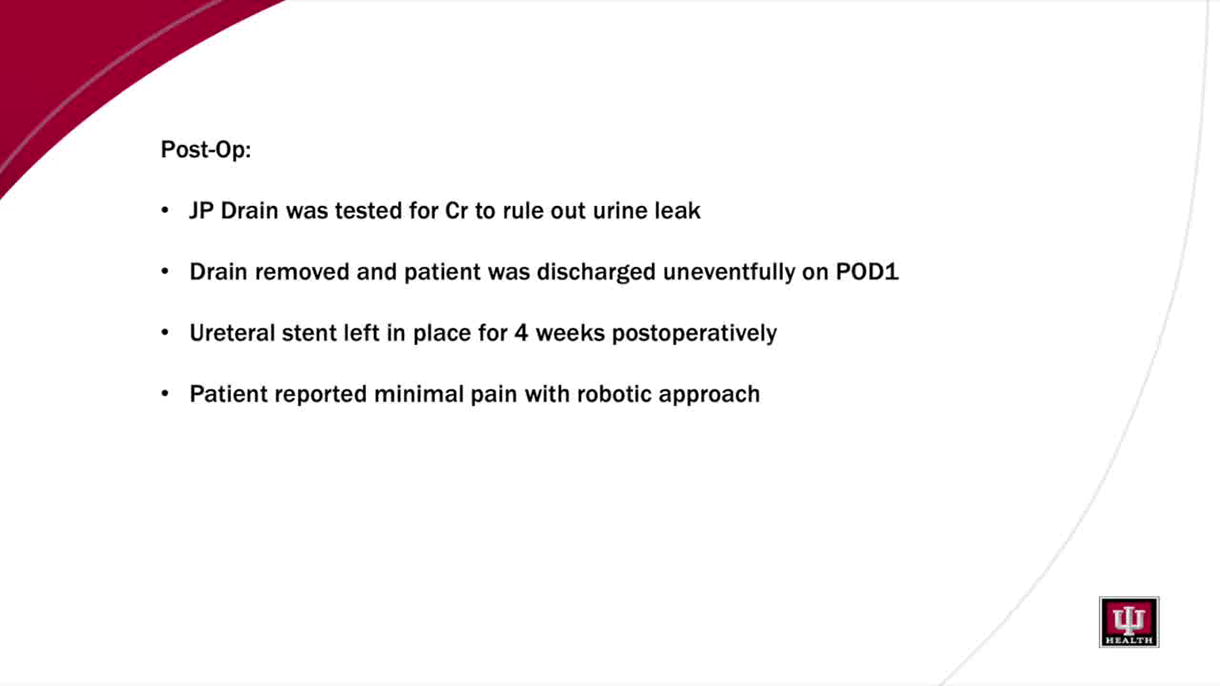
On postoperative day 1, the surgical drain was removed after being tested for creatinine and confirming a watertight anastomosis. The patient was discharged uneventfully with minimal pain and returned to the clinic 4 weeks later for ureteral stent removal in the clinic. Postoperative imaging demonstrated resolution of the left upper pole hydronephrosis with visualization of contrast passage through the distal ureteroureterostomy anastomosis. This patient illustrates a case of successful robotic surgery for management of ureteral duplication.
Conclusions:
Ureteral duplication and its associated sequelae may be managed with robotic distal ureteroureterostomy depending on the differential renal function and ureteral anatomy. In this case, both poles of the duplex kidney were functional and without reflux, thus we were able to avoid hemi-nephrectomy to preserve renal function. When clinically appropriate, robotic-assisted intervention provides a minimally invasive alternative to open ureteral reconstructive surgery.
The authors have no applicable source of funding, commercial associations, or conflicts of interest to disclose in connection with the creation of this video.
Patient Consent Statement:
The authors have received and archived patient consent for video recording/publication in advance of video recording of the procedure.
Runtime of video: 5 mins 31 secs.
Keywords
Get full access to this article
View all access options for this article.