






Abstract
Introduction:
Determining metastatic spread to the inguinal lymph nodes is the single most important prognostic factor in predicting long-term survival of penile cancer. 1 This surgical video offers an approach to bilateral inguinal lymph node dissection using the Da Vinci SP+1 for an 84-year-old man with T2 penile cancer status-post partial penectomy.
Materials & Methods:
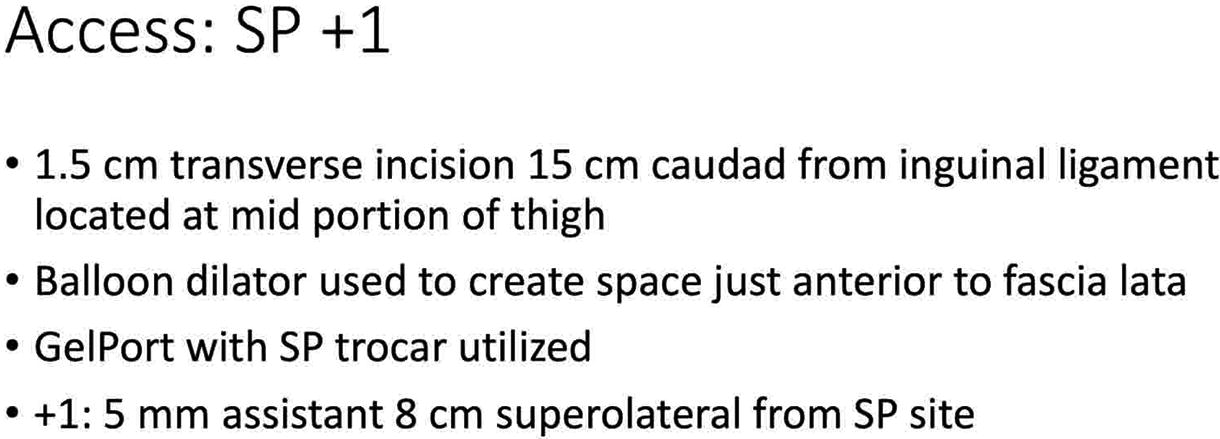
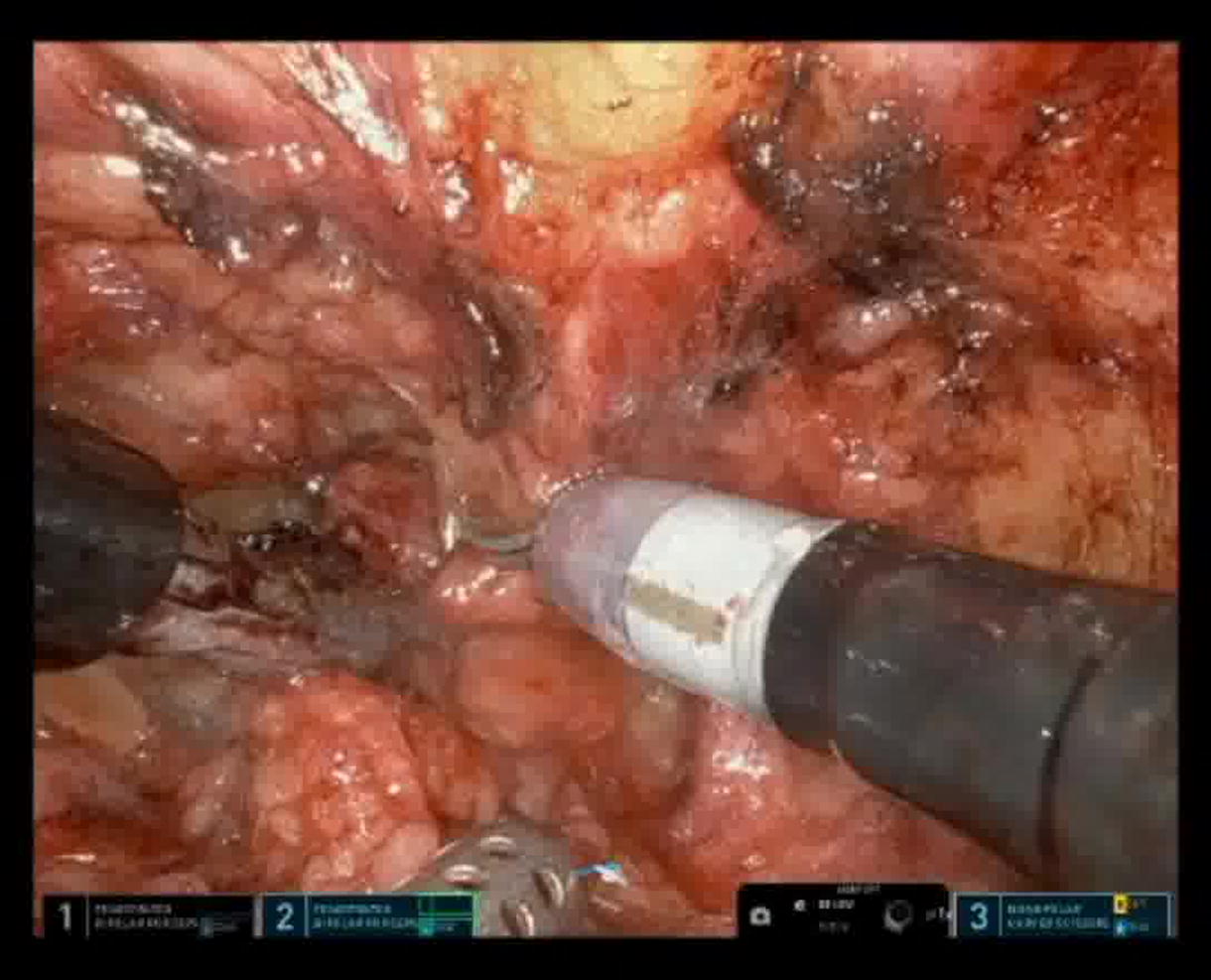
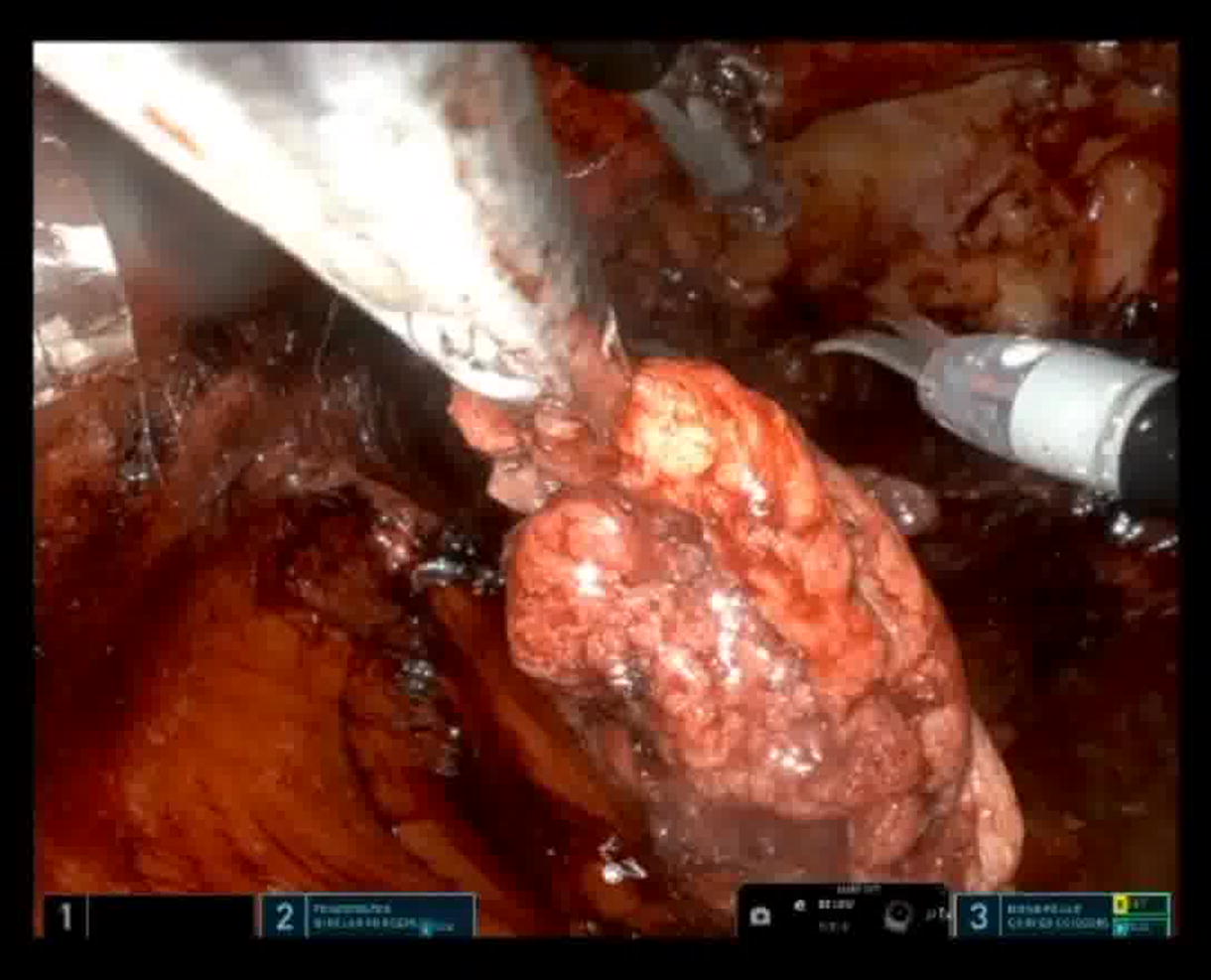
A 1.5 cm transverse incision was made 15 cm caudally from the inguinal ligament on the mid-thigh. The utilization of a round balloon dilator created space just anterior to fascia lata. A GelPort with a Single Port trocar was utilized. A 5 mm AirSeal assistant port was placed 8 cm superolateral from the SP site. After gaining entrance, the fascia lata is visible. We identify anterior Scarpa’s fascia to develop the superficial lymph node packet. The great saphenous vein is followed cranially to the inguinal ligament. Nodes are taken en bloc from the adductor longus medially to the femoral artery laterally. Major lymphatics are sealed with 5 mm metal clips. After the lymphatic bundle is freed, the space is irrigated with Betadine. Frozen sections are sent to pathology, and then steps are repeated on the contralateral side. A Jackson-Pratt drain is placed through the assistant port incision.
Results:
Console time for this procedure was 158 minutes. The final pathology report read negative for malignancy. The patient tolerated the procedure well, reported no adverse events, and was discharged on postoperative day 1. Estimated blood loss was 75 cc.
Conclusions:
This surgical approach with the single port and assistant port offers a natural and convenient method for the small anatomical working space. Additionally, this approach minimizes incision wounds. Advancements in single port instrument sealants would further improve this procedure.
Dr. Amar Singh is a consultant for Boston Scientific, Focal One, and Intuitive Surgical. The remaining authors have no commercial associations or conflicts of interest to disclose.
Patient Consent Statement:
The authors have received and archived patient consent for video recording/publication in advance of video recording of the procedure.
Exact Runtime of video: 4 mins 57 secs
Runtime of video: 4 mins 58 secs
Keywords
Get full access to this article
View all access options for this article.