






Abstract
Introduction:
Stone migration during any endoscopic urologic procedure is a disappointing event both for the patient and the urologist. Residual stone fragments postpercutaneous nephrolithotomy (PCNL) can occur in up to 8% of patients. 1 In certain scenarios of supine PCNL, it is more commonly encountered. 2 Creation of multiple tracts or by endoscopic combined intrarenal surgery (ECIRS), the residual fragments can be dealt, the operative time and instrumentation are more in ECIRS and the blood loss is exponentially more with the number of punctures. 3,4 In this study, we portray a novel method of prevention of stone migration in supine PCNL by packing the upper pole calyx/central region by lined sterile gauze and removing the same after confirming stone clearance.
Materials and Methods:
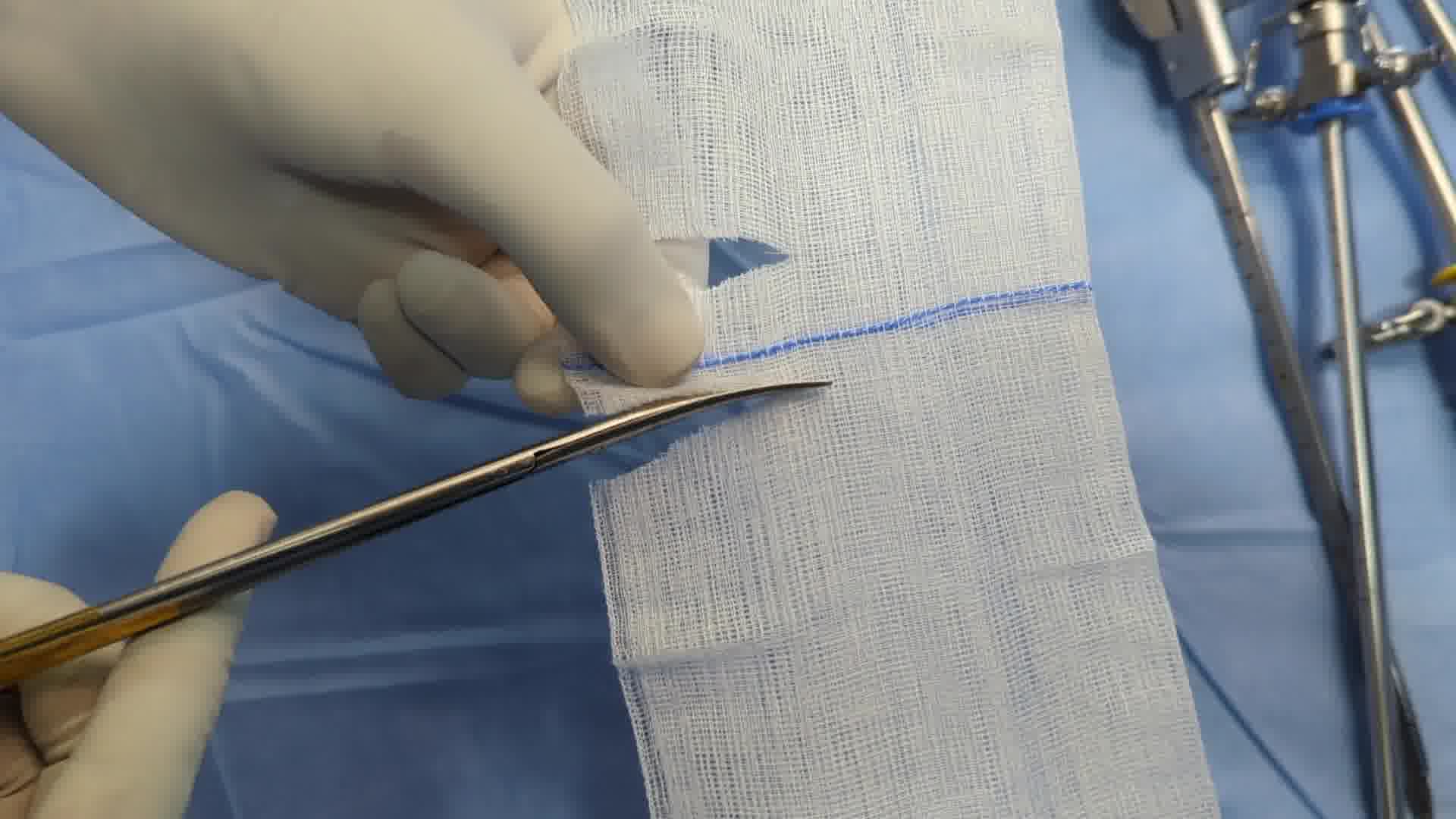
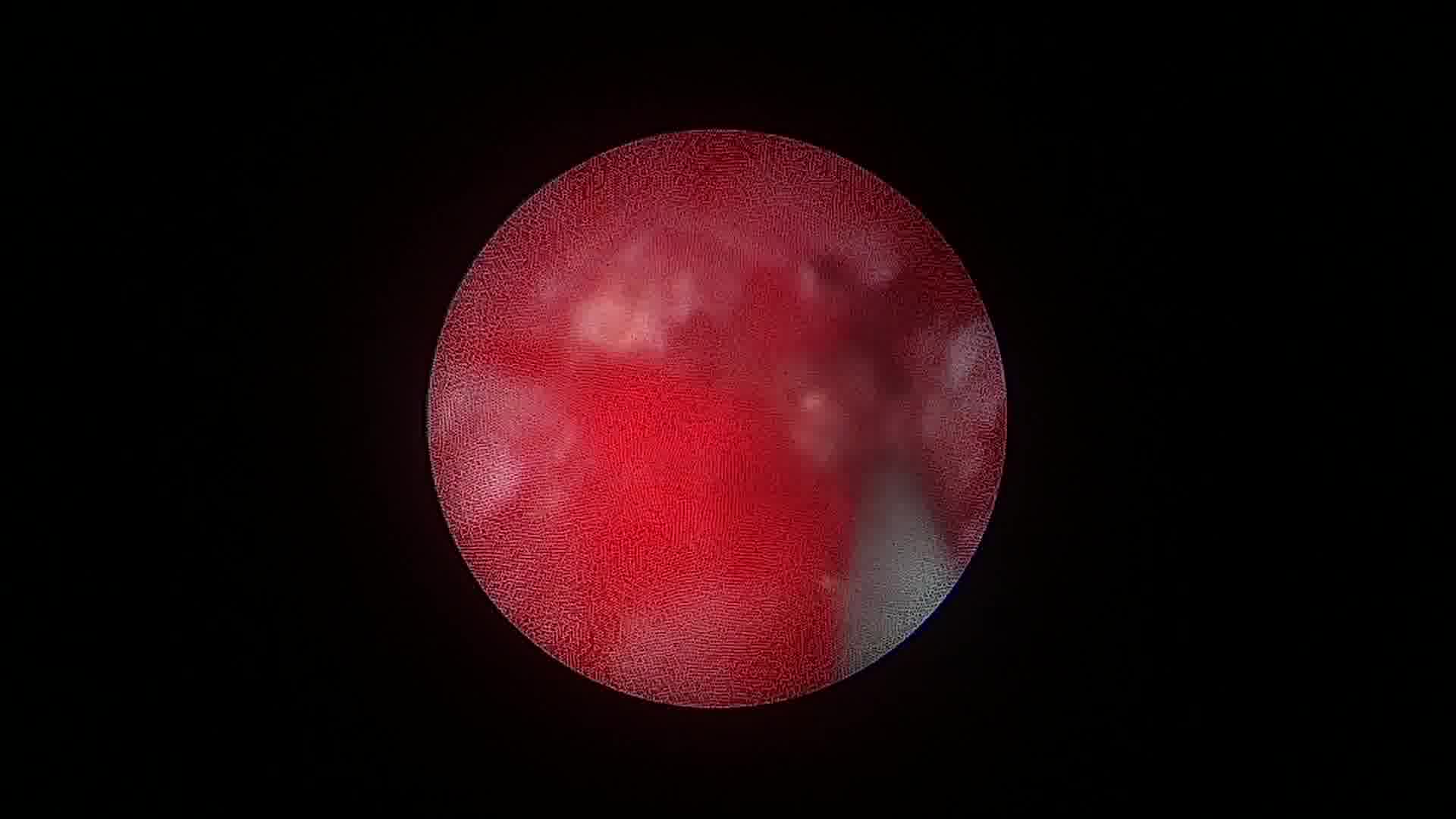
In this study, we deliver a technique that is ideal in cases of renal pelvic calculus or central region—lower calyceal calculi. With the patient in the Galdakao-modified Valdivia position and after making the puncture and dilating the tract, a nephroscope is deployed and the stone location is confirmed. The ostium of the upper pole calyx is plugged with a lined gauze of size 3 × 2 cm (with radio-opaque lining) as soon as the ostium is seen. Poststone fragmentation and extraction of the stones, imaging confirmed that there are no residual fragments in the upper pole and the gauze plug is removed in toto.
Results:
In our case, the technique used was easy to adapt and it was fruitful in preventing migration of residual fragments. The wet gauze helped in capturing some minute fragments that were released poststone fragmentation. There was no complication pertinent to the adaptation of this technique, though other routine complications of PCNL are not studied or compared secondary to adaptation of this technique.
Conclusion:
Plugging a calix with sterile material like a gauze can prevent stone migration into the calix and there are no associated complications associated with it. Sterile gauze with radio opaque lining is well visible on imaging that adds to its safety in case the surgeon finds it difficult to retrieve the gauze at any point during the procedure.
Patient Consent Statement:
The authors have received and archived patient consent for video recording/publication in advance of video recording of procedure.
The authors declare no conflict of interest.
Runtime of video: 4 mins 52 secs
Get full access to this article
View all access options for this article.