





Abstract
Introduction and Objectives:
A potential significant complication of percutaneous kidney stone removal surgery (percutaneous nephrolithotomy) is surgical tract bleeding. 1 –8 The ideal method to control this bleeding would be to stop the bleeding without compromising kidney function. Current techniques to control tract bleeding, including vessel embolization 9,10 and nephrectomy, 11 result in loss of kidney function. 12 –14 The purpose of this study is to describe a novel hemostatic sandwich technique that controls severe hemorrhage from the percutaneous tract by creating a tamponade effect between two catheter balloons. 12,13,15 –20
Materials and Methods:
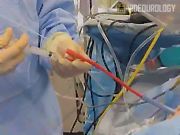
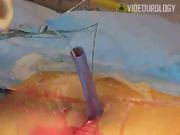
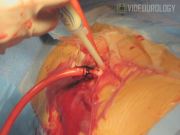
A retrospective review was performed on four percutaneous nephrolithotomy patients who experienced severe tract bleeding and were treated using the hemostatic sandwich technique. Two balloon catheters were used in conjunction with gelatin matrix to form a hemostatic sandwich. A large balloon catheter was placed into the renal pelvis, inflated, and gently pulled against the inner wall of the kidney to occlude the inner surface of the nephrostomy tract. This prevented blood or gelatin matrix (FloSeal®; Baxter) from entering the renal pelvis or the collecting system while simultaneously preventing urine from leaking out of the kidney. The outer surface of the tract was occluded with an additional balloon catheter that was placed just below the skin. Five milliliters of gelatin matrix was injected into the tract between the two balloons before inflation of the second balloon catheter, thereby completing the hemostatic sandwich.
Results:
Mean estimated blood loss was 562 mL and the postoperative hemoglobin stabilized by day 2 in all patients. No patients required further invasive procedures or further renal exploration to control bleeding. There were no major complications after use of this technique, and the only minor complication was a single case necessitating blood transfusion.
Conclusions:
The hemostatic sandwich successfully controlled bleeding in all four patients. The hemostasis achieved without renal damage suggests that this procedure should be considered in all patients with severe bleeding after percutaneous kidney surgery.
None of the authors have any commercial associations that may create a conflict of interest in connection with this video or abstract.
Video previously presented at World Congress of Endourology, Munich, Germany, October 2009.
Runtime of video: 3 mins 49 secs
Keywords
Get full access to this article
View all access options for this article.