






Abstract
Clinical History:
The patient is a 45-year-old woman with a history of cervical cancer with radiation-induced pan-ureteral stricture. The patient was deemed to be essentially cancer free and was managed with stent placement for chronic duration. Upon further imaging, up-and-down-o-gram and cystoscopy demonstrated pan-ureteral stricture managed with right nephrostomy tube. Patient elected to proceed with right ureteral repair for definitive treatment with risks, benefits, and alternatives explained.
Physical Examination:
No abnormal physical examination findings.
Diagnosis
: Right pan-ureteral stricture.
Data series on patients with ureteral stricture disease managed with ileal ureter robotic reconstruction at Robert Wood Johnson University Hospital:
Parameters
Patient 1
Patient 2
Patient 3
Demographics
Age (years)
63
45
35
Gender
Female
Female
Female
BMI (kg/m2)
23.6
29.6
18.6
Diagnosis
Right ureteral stricture
Right pan-ureteral stricture
Left ureteral stricture
American Society of Anesthesiologist score
3
3
2
Postoperative
Operative time (minutes)
618
218
221
Estimated blood loss (mL)
700
50
Minimal
Intraoperative transfusion (packed red blood cells)
1
0
0
Intraoperative complications
0
0
0
Hospital stay (days)
6
2
3
Intervention:
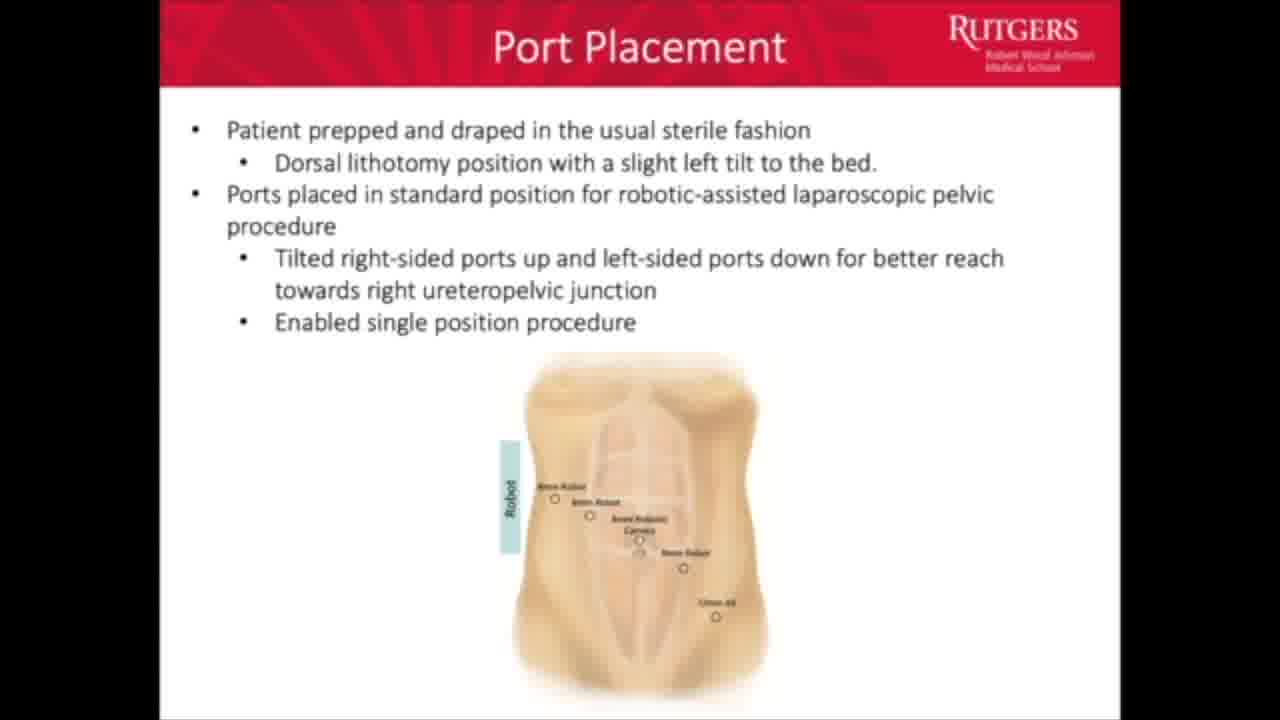
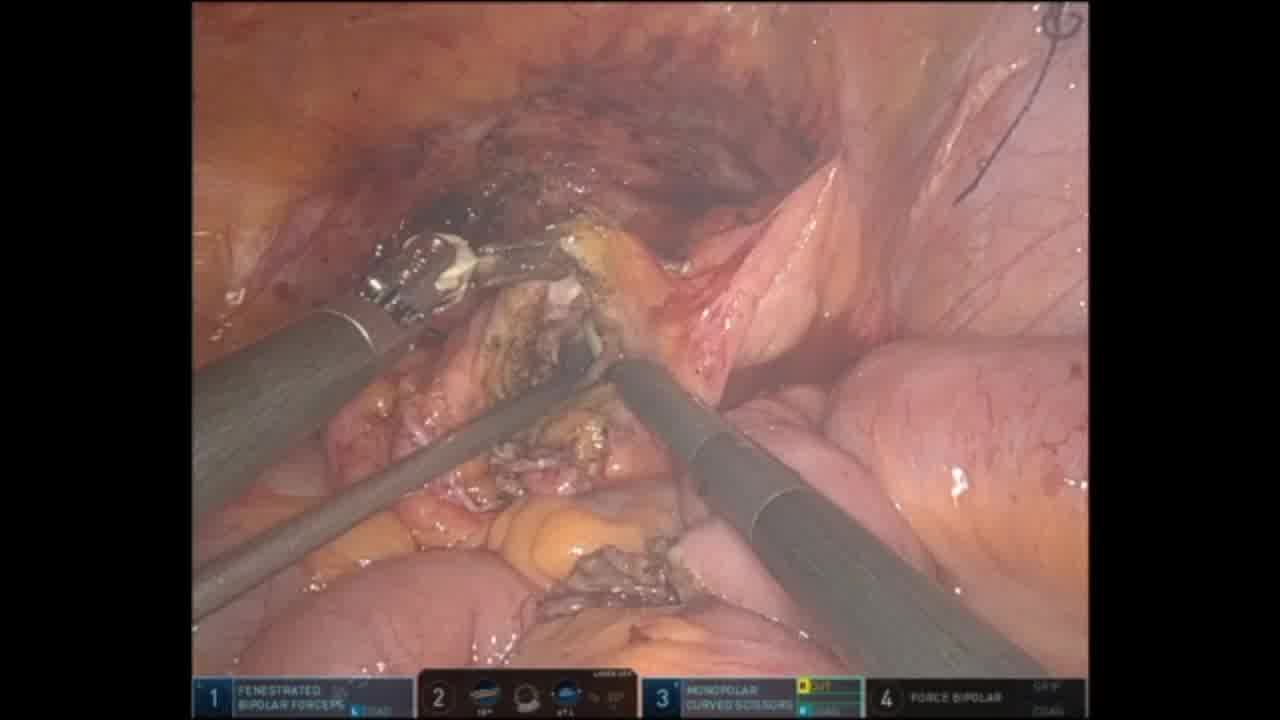
Ports were placed similar to pelvic procedure with tilted axis, skewing the right-sided ports up and skewing the left-sided ports down to allow for better reach up towards the right ureteropelvic junction. Specific port placement used for this ileal ureter interposition allowed for the patient to remain in a single dorsal lithotomy position throughout the entire procedure. Steps for the right ileal ureter interposition procedure included isolation and division of the ileum, side-to-side bowel anastomosis, anastomosis of distal ureter to bladder and placement of a Double-J stent from distal to proximal part of ileal loop, incision of renal pelvis, and side-to-side anastomosis between ileal segments and renal pelvis.
Follow-up/Outcomes:
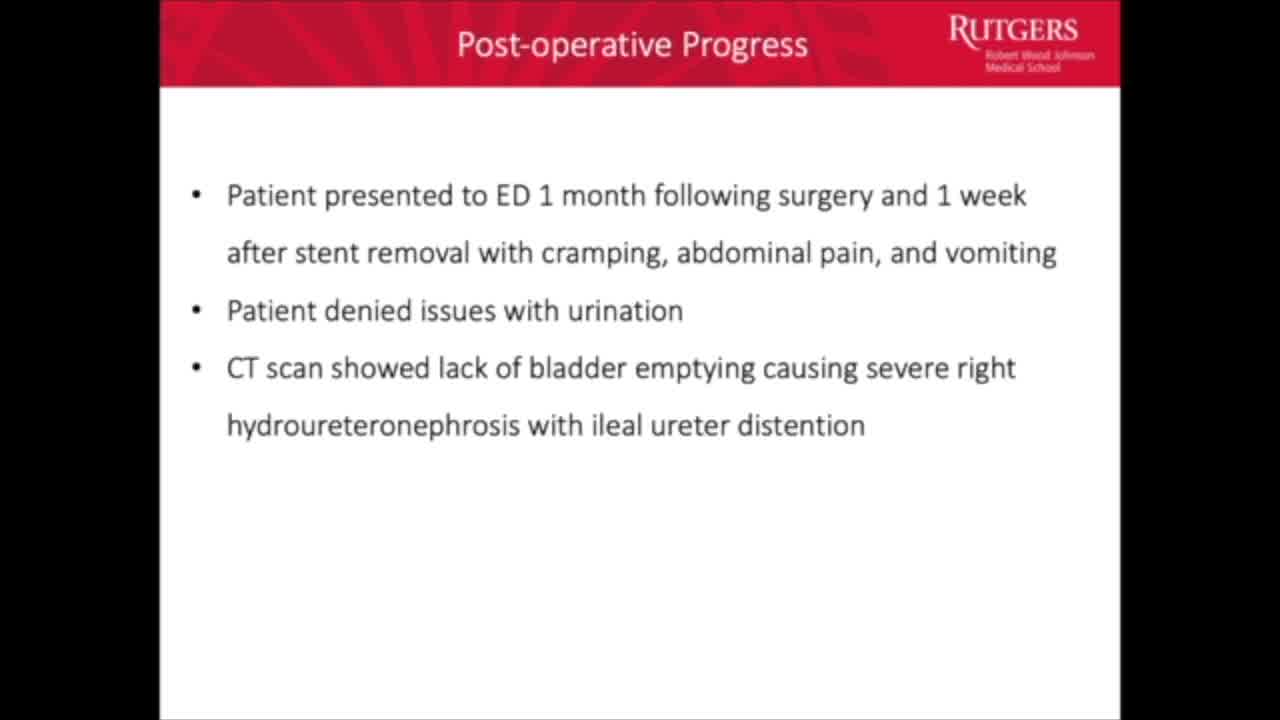
Patient's nephrostomy tube was removed intraoperatively. Estimated blood loss was 50 mL with no intraoperative complications. Patient was stable with an unremarkable postoperative course, and postoperative imaging demonstrated preserved renal function. Patient was discharged on postoperative day 2. Patient's stent was removed 4 weeks postoperatively with no restenosis. The procedure was performed effectively without postoperative complications, and patient had a follow-up mercaptuacetyltriglycine renal scan performed 3 months after surgery, which showed marked improvement of right hydroureteronephrosis. Patient was well at last follow-up, showing how robotic ileal ureteral reconstruction is a viable strategy for definitive repair of extensive ureteral defects.
Source of Work: N/A, unfunded
Regarding commercial associations, S.E.E. is a consultant for Intuitive Surgical. All other authors do not have any commercial associations or potential conflicts of interest.
Authors have received and archived patient consent for video recording/publication in advance of video recording of procedure; attached is the patient consent statement.
Runtime of video: 5 mins 46 secs
Get full access to this article
View all access options for this article.