






Abstract
Introduction and Objective:
We report the case of a 60-year-old female patient afflicted by a 2.5 cm long and high-density mid left ureteral stone. This challenging case was discussed because of the possible surgical approaches we had. After consideration, we performed a robot-assisted surgery (RAS) laparoscopic ureterolithotomy and the patient was discharged on the third postoperative day with no complications. This case reveals how emerging technologies give us possibilities in the management of complex cases.
Methods:
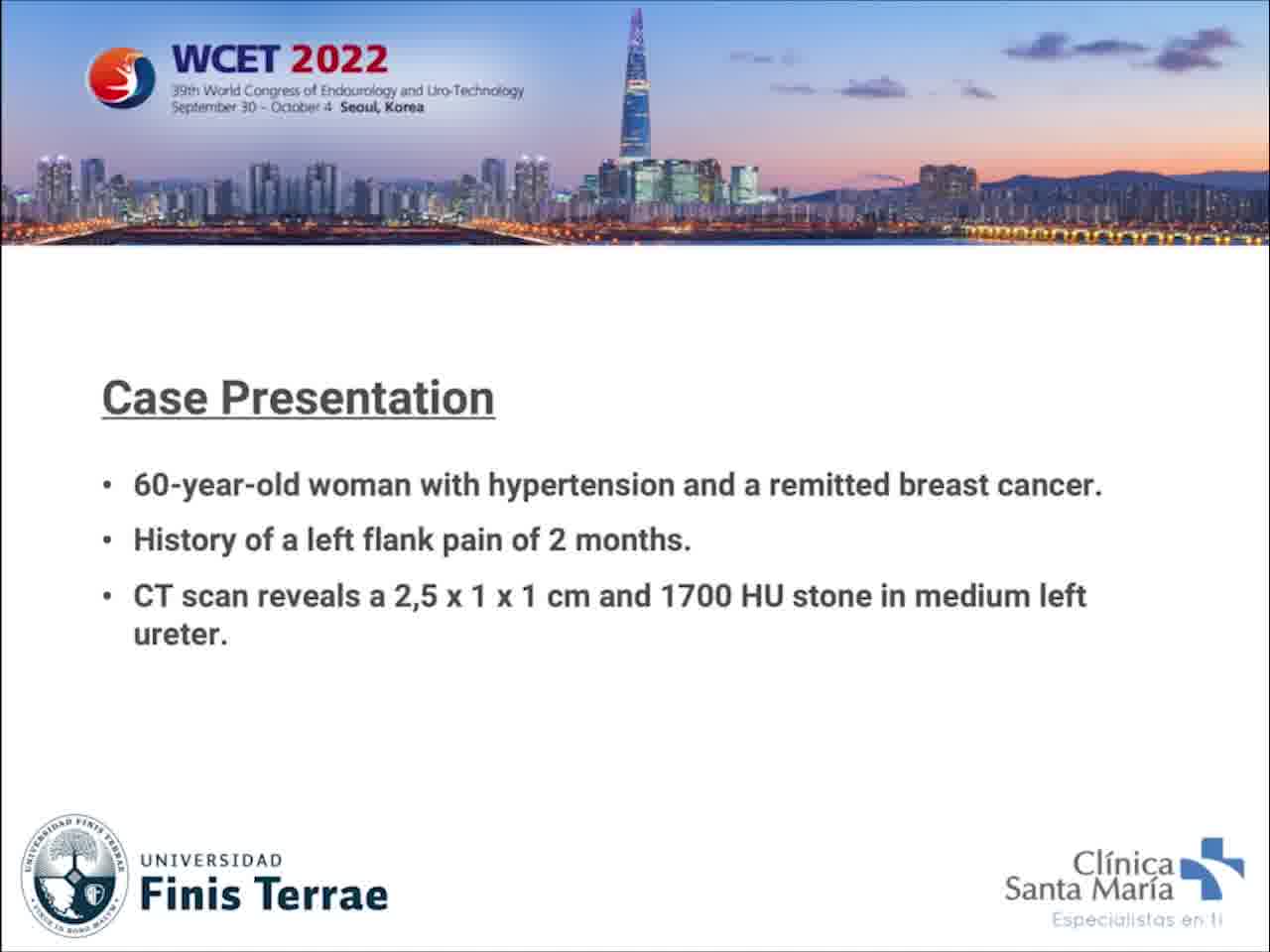
A 60-year-old woman, whose medical background included hypertension and a remitted breast cancer, was afflicted by intermittent left flank pain for the past 2 months. Creatinine levels in blood were 1.17 mg/dL. A computed tomography scan revealed 2.5 × 1 × 1 cm and 1700 Hounsfield units stone in her medium left ureter. We considered the size of the stone and density, which gave us a low likelihood of success and high risk of both intra- and postoperative complications. We also considered that an endourologic approach would require multiple interventions. After thorough discussion, we opted for a RAS laparoscopic ureterolithotomy, because of decreased recovery time and lower morbidity.
Results:
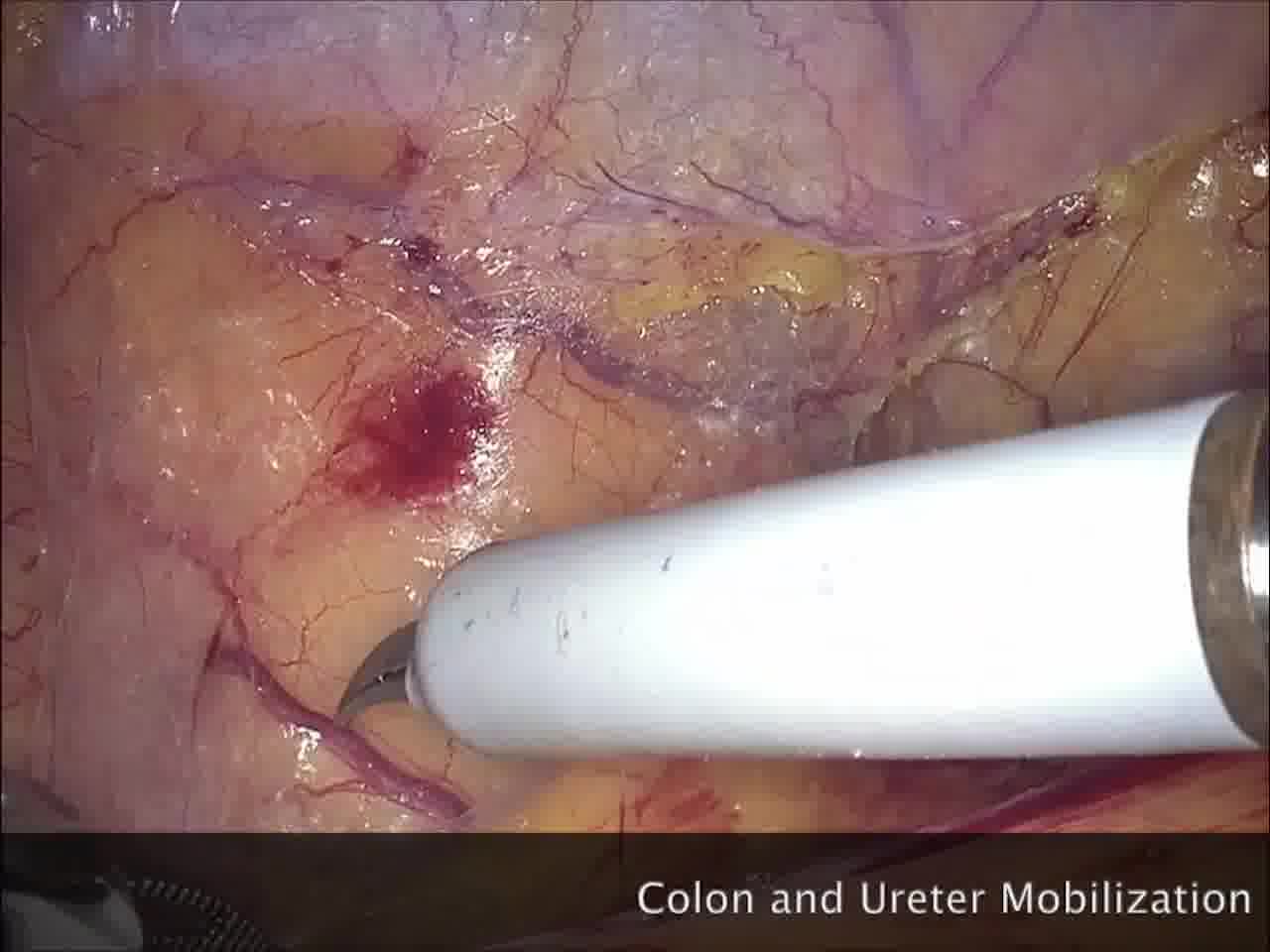
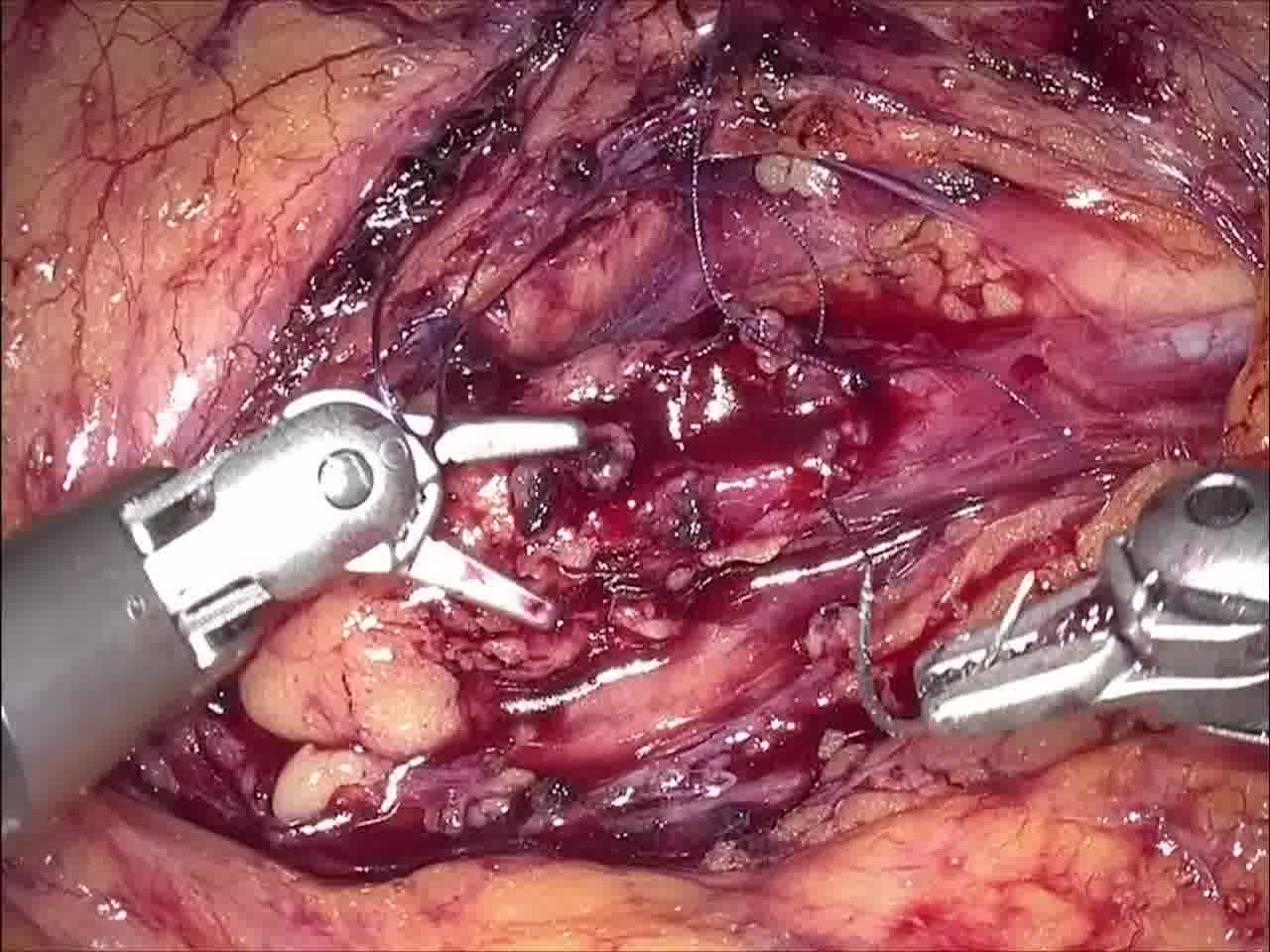
The surgical procedure lasted 150 minutes (console 110 minutes). Under general anesthesia, and in a right lateral recumbent position, we proceeded with a left transperitoneal RAS laparoscopic ureterolithotomy. A 2-cm-long longitudinal ureterotomy was performed and the stone was removed. We proceeded with a longitudinal ureterotomy closure, leaving a Double-J stent as a tutor. After confirming hermeticity we placed a drain and proceeded with closure. The patient had an excellent postoperative evolution. The Double-J stent was removed after 4 weeks, with complete resolution of the clinical symptoms.
Conclusions:
Indications for ureterolithotomy are rare in the modern era of endourology. Current indications include stones with a low likelihood of treatment success using extracorporeal shockwave lithotripsy, ureteroscopy, or percutaneous techniques. We opted for a safe and effective option, assisted by the recently launched HUGO™ RAS system (Medtronic, Minneapolis, MN), which could make a meaningful difference in expanding access to care to more patients around the world, because of its versatility, compatibility, mobility, and cost-effectiveness. Therefore, we were able to safely resolve a challenging case, by performing the first HUGO RAS laparoscopic ureterolithotomy, resulting in a stone-free procedure.
No competing financial interests exist.
Runtime of video: 4 mins 52 secs
Acknowledgements: Authors have received and archived patient consent for video recording/publication in advance of video recording of procedure.
Get full access to this article
View all access options for this article.