






Abstract
Introduction:
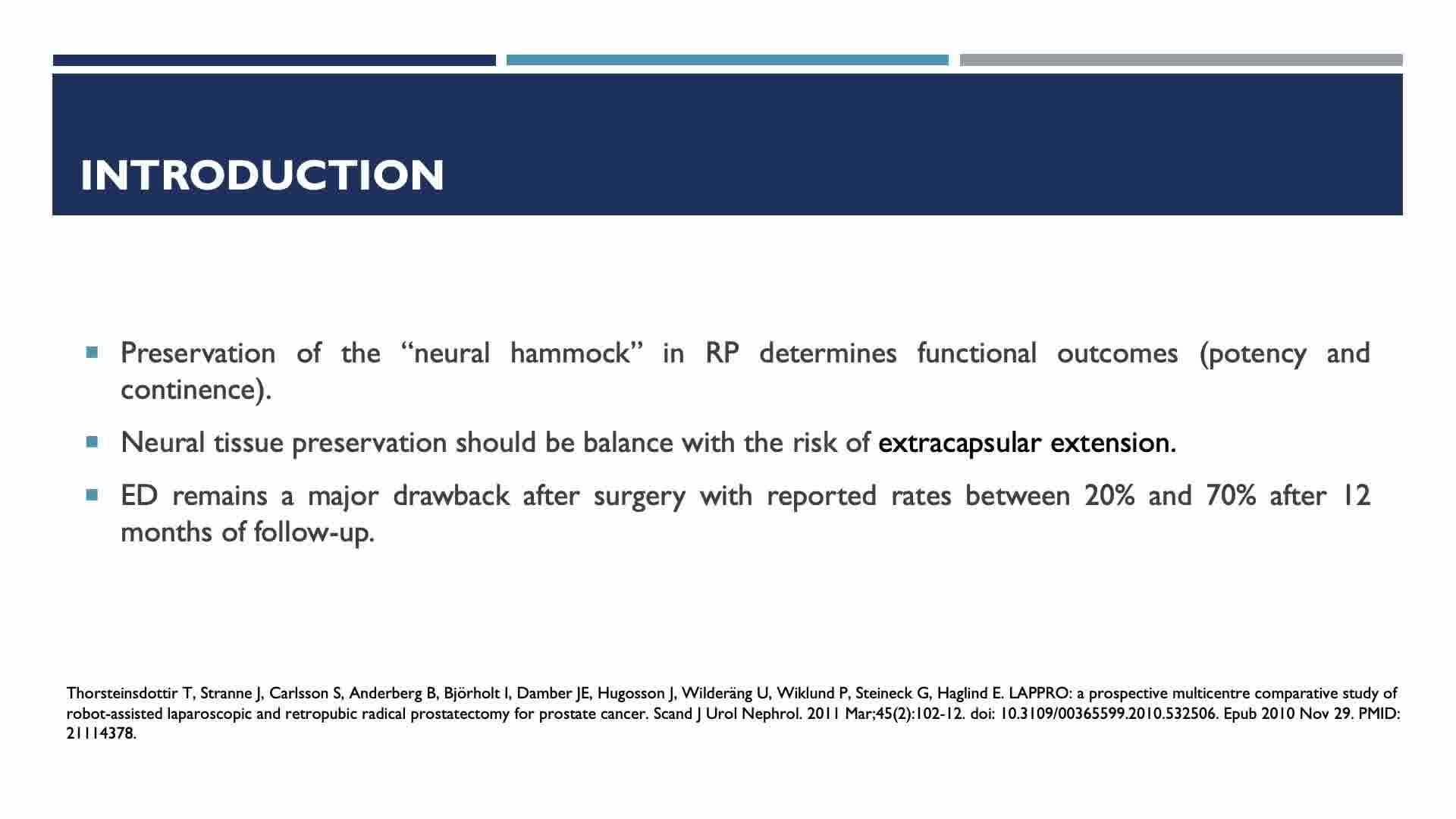
Nerve sparing determines functional outcomes after radical prostatectomy. Given the impact on positive surgical margin (PSM) rates, neural tissue preservation should be carefully balanced against the risk of extracapsular extension (ECE). 1,2 To achieve this goal and improve erectile function (EF) outcomes, we have proposed an innovative nerve-sparing technique denominated saline-assisted fascial engorgement (SAFE) guided by microultrasound (MUS).
Materials and Methods:
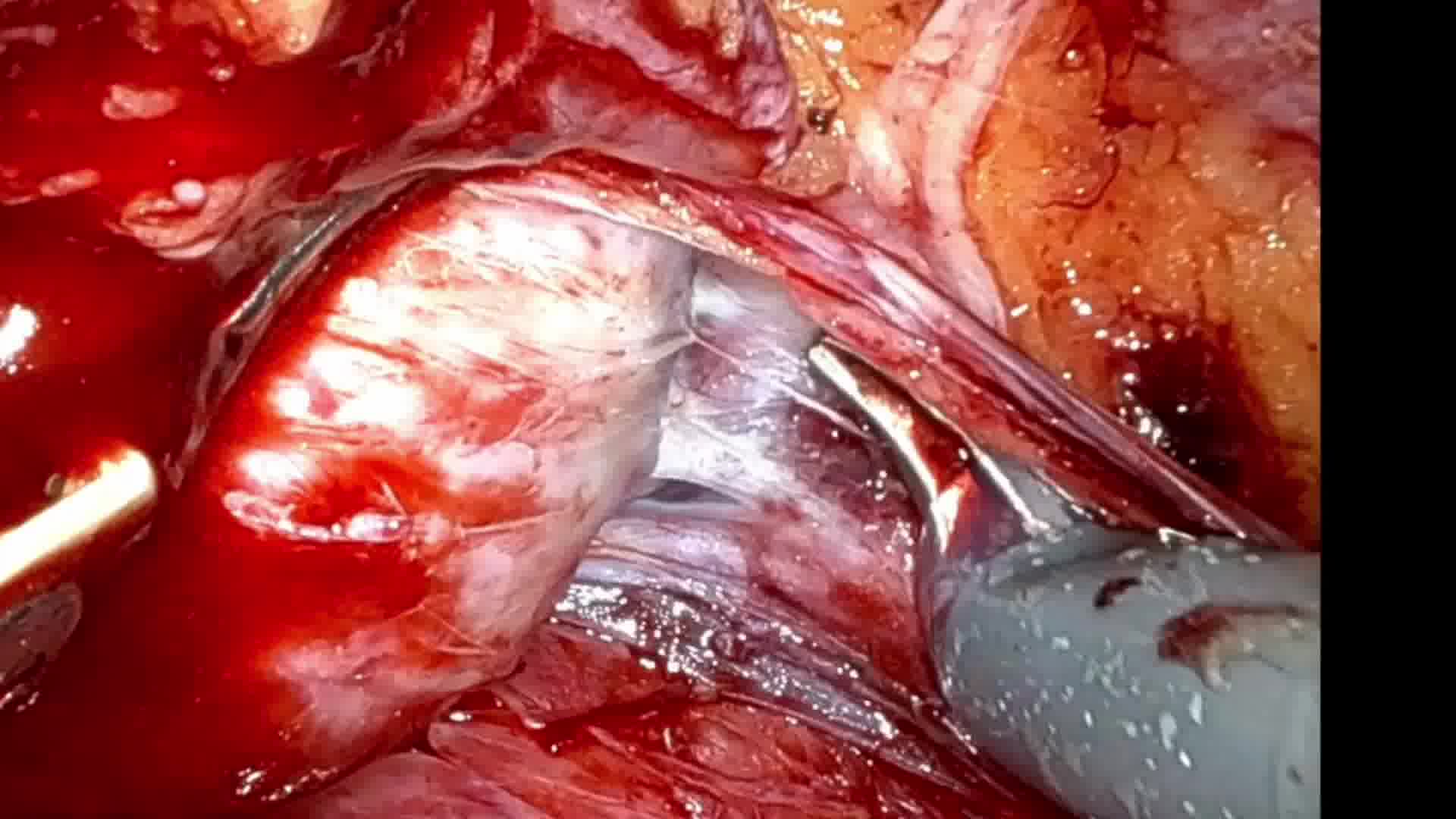
This pilot study included 36 consecutive cases of potent men (sexual health inventory for men [SHIM] ≥ 17) who underwent robot-assisted radical prostatectomy between October 2021 and January 2022 by a high-volume surgeon, and who had a unilateral risk of ECE between 21% and 73%. 3 The first 19 and the next 17 men underwent standard dissection and SAFE, respectively. The SAFE nerve-sparing technique was performed in real time after the early release of the neurovascular bundle. After identification of the plane between Denonvilliers' fascia and prostatic capsule, and starting from the apex toward the base, 20 mL of normal saline solution was injected with a 22-gauge × 177.8 mm spinal needle. To create the surgical planes, the SAFE technique was tailored according to the visualized integrity of the prostatic capsule with a transrectal MUS. 4 EF was assessed by SHIM score preoperatively, 6 weeks, and 3 months after surgery. Continence rate was defined as completely pad-free.
Results:
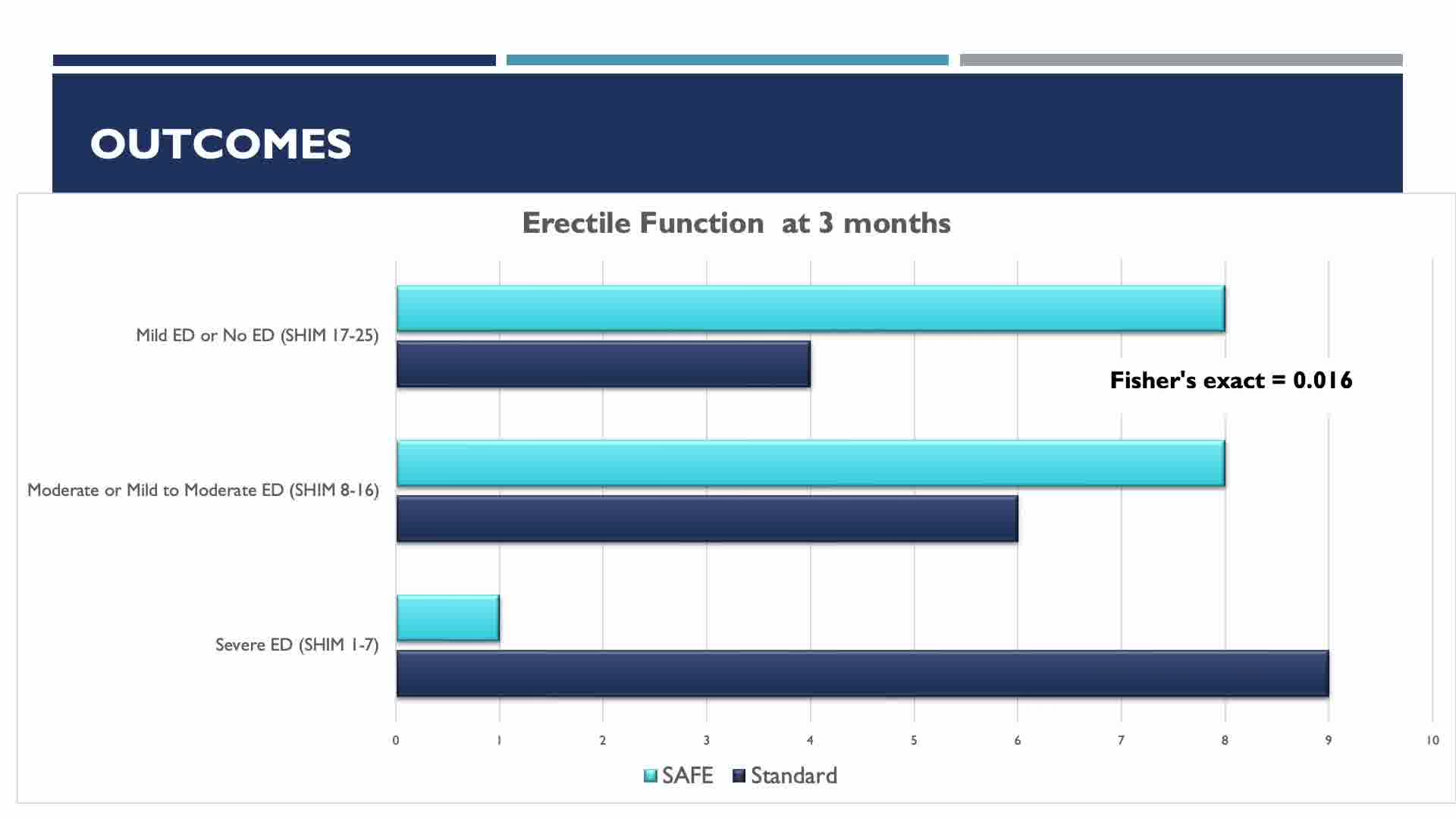
Men who underwent the SAFE technique achieved higher SHIM scores at 6 weeks (p = 0.037) and 3 months (p = 0.016) follow-up. As per protocol, all patients received PDE5i before and after surgery. Potent patients in the SAFE group did not require intracavernosal injections (ICIs), whereas two patients in the control group needed ICI at 3 months follow-up. No difference was found in urinary continence (p = 0.75). All patients had negative surgical margins in final pathology analysis irrespective of the group.
Conclusion:
SAFE nerve preservation guided by MUS is a practical, harmless, and easy technique to perform. It improves postoperative SHIM scores in patients at high risk for ECE without increasing PSM rates.
Patient Consent Statement: Authors have received and archived patient consent for video recording/publication in advance of video recording of procedure.The authors declare that there is no conflict of interest in connection with this video.
Runtime of video: 7 mins 8 secs
Keywords
Get full access to this article
View all access options for this article.