






Abstract
Introduction and Objectives:
Hem-O-Lok Weck Clip (HOLC) is widely used to achieve athermal hemostasis during minimal access urologic surgery, most commonly during prostatectomy and nephrectomy (donor as well as simple/radical/partial). Clip migrations after radical prostatectomy have been widely reported in literatures worldwide. Misfiring of clips has also been experienced intraoperatively, which if diagnosed during surgery can prevent dreadful postoperative complication and medicolegal issues.
Methods:
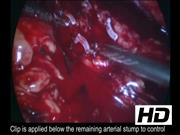
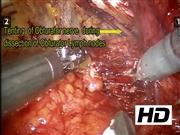
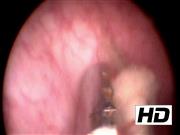
Five patients who have developed intra- as well as postoperative complication related to clips or intraoperative misfiring of Weck clip have been described in this video presentation. Case 1: Slippage of the Weck clip applied over the left upper renal artery during laparoscopic donor nephrectomy. Case 2: Accidental clipping of right upper ureter during right robotic partial nephrectomy. Case 3: Accidental clipping of obturator nerve during obturator lymph node dissection during robot-assisted laparoscopic radical prostatectomy. Case 4: Patient presenting with obstructive lower urinary tract symptoms after 9 years of robotic radical prostatectomy. Cystoscopy showed multiple Weck clip migration at vesicourethral anastomosis. Case 5: Patient presenting with right flank pain after 9 years of right robotic partial nephrectomy. Flexible ureterorenoscopy showed multiple Weck clips migrated into the pelvicaliceal system.
Results:
Case 1 was managed by applying the Weck clip again at the base of renal artery with 3 mm of residual stump. Application of clip over the bleeding artery stump in bloody field should be avoided to prevent worse complications. Cases 2 and 3 were managed by fulgurating the knob of Weck clip with harmonic scalpel and removing the clip. The defect created was sutured with Vicryl suture material. Cases 4 and 5 were managed by removing the Weck clips with forceps. None of the patients developed any complaint during the mean postoperative follow-up duration of 36 months (ranging from 12 to 84 months).
Conclusions:
Hem-O-Lock Weck Clip should be used judiciously and cautiously near the vital structures and anastomotic site. Owing to its nature to migrate through the anastomotic site, free lying clips should be actively searched and removed to avoid postoperative morbidity and intervention.
Consent:
Authors have received and archived patient consent for video recording/publication in advance of video recording of the procedure.
No competing financial interests exist.
Runtime of video: 6 mins and 6 secs
Get full access to this article
View all access options for this article.