






Abstract
Introduction:
Secondary pelviureteral junction obstruction (PUJO) may be defined as one or more of recurrent symptoms, renographic obstruction, and renal function deterioration after primary intervention for PUJO. 1 Causes include renal pelvis ischemia, anastomotic dehiscence, a failure to identify a crossing vessel, and ureteral stent blockage or migration. 2,3 Secondary pyeloplasty is associated with longer operating times, higher blood loss, and increased recurrence rates compared with primary pyeloplasty. 4 Originally described in 1951, Culp de Weerd pyeloplasty (CdWP) utilizes a local renal pelvis flap to widen the pelviureteral junction without formal dismemberment, and thus may be particularly suited to stricturing caused by failed endopyelotomy or pyeloplasty. 5 Robotic CdWP represents a novel approach for secondary PUJO, which is poorly described in published literature to date. We present three cases of robotic CdWP for secondary PUJO with one operative video demonstration.
Materials and Methods:
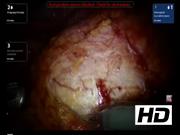
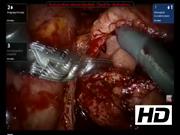
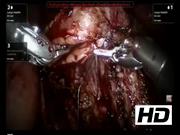
All three patients had symptomatic recurrent PUJO on mercaptoacetyltriglycine (MAG-3) diuretic renography after previous Anderson-Hynes pyeloplasty (AHP), along with a capacious renal pelvis on cross-sectional imaging. Time from AHP to reoperation was 9, 7, and 2 years, respectively. At operation a three-way urinary catheter was inserted and the patient was placed in a lateral position with minimal table break. A standard three-port robotic technique was employed, utilizing two 8-mm da Vinci™ Si cannulas and an additional 5-mm cephalad assistant port. After completion of the posterior wall reconstruction a 4.8F × 26 cm Double-J ureteral stent was placed antegradely, with reflux of bladder irrigant confirming correct stent placement. A 15F drain was inserted at the end of the procedure. After inpatient discharge all patients underwent stent removal at 4 weeks, followed by repeat diuretic renography at 8 weeks. Further renography was performed at 12 and 24 months before formal hospital discharge.
Results:
There were no intra- or postoperative complications. All patients experienced postoperative symptom resolution along with improved parameters on MAG-3 renography and stable serum renal biochemistry. Two cases have been discharged and a final case remains asymptomatic 3 months after surgery.
Conclusion:
Robot-assisted CdWP appears a safe and effective technique for the management of secondary PUJO. Patient selection is of crucial importance, as an adequate volume of renal pelvis tissue is required to construct a spiral flap. Further studies are required to determine whether this technique confers additional clinical benefit over repeat dismembered pyeloplasty or endopyelotomy.
No competing financial interests exist.
Runtime of video: 10 mins
Get full access to this article
View all access options for this article.