





Abstract
Introduction:
With the development of robotic surgery, minimally invasive pyeloplasty has become more widely available. Robotic pyeloplasty and laparoscopic pyeloplasty have approached the success of open pyeloplasty, 1,2 while offering the potential for shorter recovery time and reduced postoperative pain. 3 In this video, the operative technique of dismembered and nondismembered pyeloplasty is reviewed.
Materials and Methods:
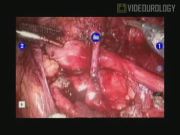
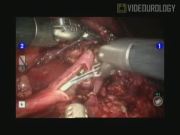
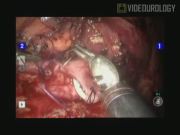
We utilize portions of five different cases to illustrate the key steps of a robotic pyeloplasty. In the first two cases, dissection of the ureter and pelvis is shown. Complete mobilization of lower pole crossing vessels, and deciding how and when to transpose them is described. Oblique division of the ureteropelvic junction (UPJ) and lateral spatulation is illustrated. In the third case, we illustrate how strategic placement of stays sutures can facilitate division and reanastomosis of the UPJ. The anastamosis is completed with posterior and anterior running sutures in a lateral to medial direction. The last two cases demonstrate nondismembered pyeloplasties.
Results and Conclusion:
Robotic pyeloplasty is an effective means for treating UPJ obstruction. Success of this procedure is over 95%, in a multi-insitutional review. 4 However, care must be taken to adequately remove fibrotic tissue, and to create a wide, tension -free anastamosis.
No competing financial interests exist.
Runtime of video: 14 mins 34 secs
Keywords
Get full access to this article
View all access options for this article.