





Abstract
Introduction and Objective:
Robot-assisted pyeloplasty (RAP) is becoming increasingly more utilized in the treatment of ureteropelvic junction obstruction in children. Although many centers place stents in an antegrade manner during RAP, we believe that this exposes children to another, often unnecessary, anesthetic to remove the stent. Instead, we place a retrograde stent on a string at the beginning of the procedure. We present a video of a typical RAP with retrograde stent placement to illustrate that the stent does not interfere with the surgical procedure.
Patients and Methods:
We retrospectively collected RAP data performed at our institution. We excluded those treated with a redo pyeloplasty, and/or a percutaneous nephrostomy tube for postoperative drainage. We collected data on antegrade stent placement and complications.
Surgical Technique:
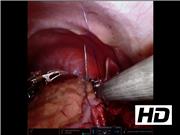
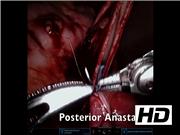
Cystoscopy and retrograde pyelogram are performed. A wire is placed into the ureter and the cystoscope is removed. A retrograde pyelogram is performed and then a retrograde stent with a string is placed under fluoroscopic guidance. The patient is then repositioned supine and secured in place. Robotic trocars are placed in a standard HIdES manner and the table is then rotated and the robot docked. The colon is reflected or a transmesenteric approach is performed when favorable. The ureter/pelvis is then mobilized. A hitch stitch is placed to help with renal pelvis retraction. The pelvis is incised at its most dependent portion, carefully avoiding the indwelling stent. Vicryl suture is used to reanastomose the ureter to the renal pelvis at the most dependent portion. The stent is placed inside the renal pelvis and the pyeloplasty is completed in a standard manner. The bladder is then filled to confirm no evidence of leak. The robot is then undocked and the laparoscopic port sites are closed. The dangler stent is not secured to the skin and is left to freely hang.
Results:
Of the 96 children who underwent RAP at our institution, retrograde stent placement was effective in 85 (88.5%). Stent complications from this group were minimal (4, 5.7%). One patient required a percutaneous nephrostomy tube because of a displaced stent, two required removal in the operating room because of a lost string, and one required removal in the operating room because of inability to tolerate stent removal awake.
Conclusions:
RAP with retrograde stent placement is a safe, effective option that helps reduce the number of anesthetics required for pediatric RAP.
No competing financial interests exist.
Runtime of video: 5 mins

Get full access to this article
View all access options for this article.