





Abstract
Introduction:
According to guidelines from the European Association of Urology and the American Urological Association, ureteroscopy (URS) has become a central therapeutic method as a substitution for shockwave lithotripsy. A marked advantage and goal of URS is complete stone removal. Flexible URS (f-URS) is currently challenging because the process of stone retrieval with basket forceps (basketing) is a stressful task. It requires handling of a flexible ureteroscope while simultaneously manipulating the basket forceps. Two-surgeon basketing technique is a conventional style. In this procedure, an operator handles a flexible ureteroscope and an assistant manipulated the basket forceps under the direction of the operator. However, this procedure may influence operative outcomes based on the following factors: skill level of the assistant and cooperation of the two surgeons. To overcome these limitations of this conventional technique, we developed a new stone retrieval procedure called one-surgeon basketing technique. The aim of this study is to introduce the one-surgeon basketing technique and to evaluate the utility of this procedure in f-URS.
Materials and Methods:
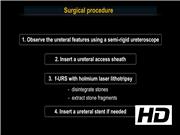
In the one-surgeon basketing technique, the operator handled the flexible ureteroscope with his nondominant hand and simultaneously manipulated the basket forceps with his dominant hand. To maintain stability during the basket forceps manipulation, the forceps were connected to the ureteroscope using a single-use basket holder (M arm; MC Medical, Tokyo, Japan). We evaluated the surgical outcomes of the patients who underwent f-URS with the one-surgeon basketing technique by utilizing the data collected between January 2014 and February 2017. All case data collected were derived from our ongoing prospective, observational, multicenter study with written consent obtained from all patients at three institutions in the SMART Study Group. We also have received and archived patient consent for video recording/publication in advance of video recording of the procedure. Patients were considered stone-free based on the following criteria: satisfactory visual clearance of stone fragments at the end of the operation (endoscopic stone-free status), absence of stones or fragments larger than 2 mm on plain X-ray of kidney, ureter, and bladder at 1 month after surgery, and absence of the need for ancillary procedures.
Results:
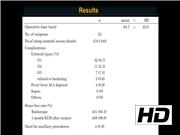
A total of 478 cases were included in this analysis. Mean stone size was 11.0 ± 5.7 mm. Mean operative time was 64.7 min. Each case was performed by 23 surgeons solely or under the surveillance of an experienced surgeon. All operators were able to complete the operations using the one-surgeon basketing technique. The stone-free status was achieved in 451 patients (94.4%) at the end of the surgery, and in 459 patients (96.0%) at 1 month postoperatively. The complications related to stone retrieval were identified in three patients (0.6%).
Conclusions:
We developed the one-surgeon basketing technique to address the limitations of the conventional two-surgeon basketing procedure. The one-surgeon basketing technique is not affected by skill level of an assistant. This technique is comparable to the two-surgeon basketing technique. We hope that the one-surgeon basketing technique will gain increasing acceptance among urologists in the coming years.
No competing financial interests exist.
Runtime of video: 8 mins 11 secs
Get full access to this article
View all access options for this article.