






Abstract
Introduction:
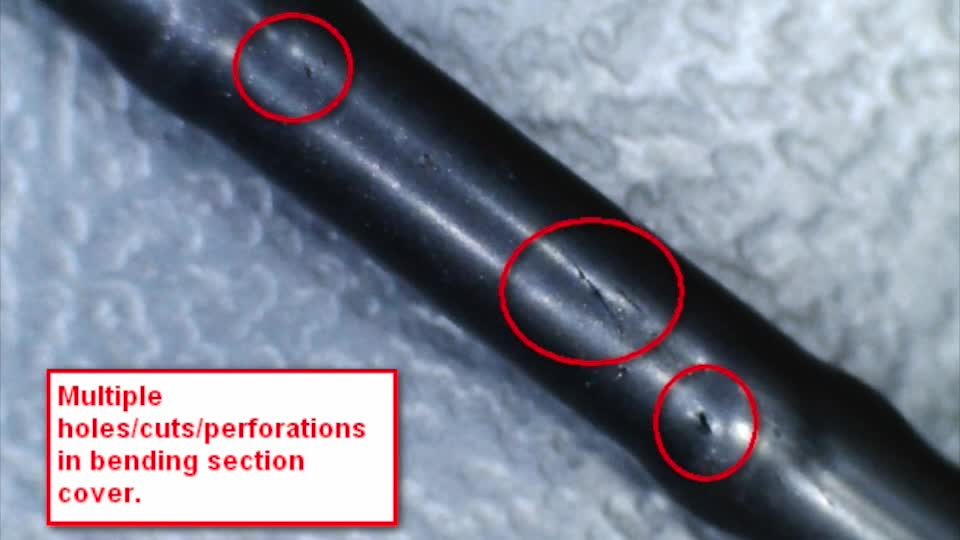
Flexible ureteroscopy was introduced in 1971 and has experienced significant improvements over the years. With an increasingly competitive market, manufacturers have developed ureteroscopes that are lighter in weight, have improved maneuverability, and optics, with the ability to use smaller caliber instruments to aid during surgery. However, durability of these reusable ureteroscopes remains a major concern. Repeated as well as inappropriate use increases the risk an ureteroscope will be damaged. This ultimately increases costs incurred in the form of repairs. In this video, we describe the types of damage that occurs to reusable ureteroscopes, the frequency of damage, and the costs required to repair the damages. We then identify the role of single-use ureteroscopes and their advantages.
Materials and Methods:
A PubMed literature search was done using the following keywords: “flexible ureteroscope,” “durability,” “cost analysis,” “reusable,” and “single-use.” Multicenter and prospective studies were prioritized and evaluated when reporting results. The video footage was taken from our institution either in the operating room or in the training laboratory.
Results:
Reusable ureteroscopes can be cost-effective but, in many trials, appear to be equivalent in all testing, including optics, deflection, and clinical outcomes such as stone-free rates. Reusable ureteroscopes, in contrast, suffer from many different types of damage at the hands of the operator and improper use. These damages are what drive the cost of the reusable ureteroscopes up and create a model wherein disposable single-use ureteroscopes are more cost-effective if they are priced <$1300 in high-volume centers.
Conclusions:
Single-use flexible ureteroscopes provide advantages in deflection and irrigation with comparable optics and stone-free rates while eliminating needs for maintenance or repairs. It is feasible to say that a transition to single-use ureteroscopes provides a cost-effective and clinically sound option for patients requiring endoscopic treatment.
Runtime of video: 4 mins 48 secs
Get full access to this article
View all access options for this article.