





Abstract
Introduction:
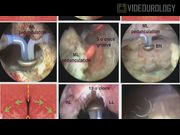
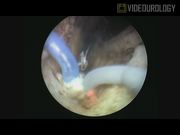
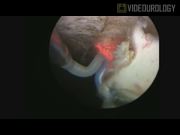
Laser enucleation for benign prostate hyperplasia (BPH) is a well-known bloodless operation with better postoperative outcome than traditional transurethral resection. 1 –3 However, the cost is not attractive and requires longer operation time and learning curve. 4 –6 We provide a feasible option with bipolar transurethral enucleation of prostate (B-TUEP) using button electrode. 7
Materials and Methods:
This prospective study enrolled patients with BPH requiring surgical intervention between September 2013 and June 2014. All operations were performed by a single surgeon. The decision to use bipolar button electrode or thulium laser was based on the choice of the patient after being well informed of the current evidence-based information of both technology 3 and financial costs. The operative techniques were identical in both groups, except for the energy source. The characteristics of the patients, as well as preoperative and postoperative measures, were collected prospectively.
Results:
There were 20 and 21 patients who received B-TUEP and laser enucleation, respectively. No significant differences in preoperative characteristics were observed between the two groups with mean prostate volume of 59.01±21.81 cm3 in the B-TUEP group and 53.31±16.22 cm3 in the laser group (p = 0.385). The mean age was slightly higher in the B-TUEP group (73.3±10.9 years vs. 67.71±9.9 years, p = 0.285). There were no statistically significant differences between the B-TUEP group and the laser group in operation time (103.6±54.6 min vs. 97.1±35.6 min, p = 0.664), resected weight (17.16±11.6 gm vs. 18.23±9.9 gm, p = 0.758), and the speed of resection (0.19±0.1 gm/min vs 0.20±0.1 gm/min, p = 0.727). There was no transurethral resection syndrome or need for blood transfusion in both groups. The postoperative catheterization time (same as hospital stay) was 1 day longer in the B-TUEP group (3.6±1.32 days vs. 2.57±1.21 days, p = 0.014). The median prostrate-specific antigen reduction rate was close (75.9% in the B-TUEP group vs. 78.2% in the laser group, p = 0.271). The improvement of maximum flow rate was also similar between the two groups (6.79±4.23 mL/second in the B-TUEP group vs. 7.21±4.19 mL/second in the laser group, p = 0.752).
Conclusions:
B-TUEP for BPH is not inferior to laser enucleation in both efficacy and safety. 1 In the national health insurance system of Taiwan, patients do not have to pay for bipolar button and loop electrode if they received B-TUEP but have to pay additional charge for laser equipment (no matter which kind of laser). Therefore, B-TUEP provides a feasible option with an additional financial benefit for patients.
Music source:
No competing financial interests exist.
Runtime of video: 7 mins 37 secs
Keywords
Get full access to this article
View all access options for this article.