





Abstract
Introduction:
Morcellation of enucleated prostate tissue was developed as a means to remove large specimens transurethrally without the need for a separate extraction site. However, morcellation can pose a distinct challenge for the inexperienced. 1 –6 By following a few sound technical principles, morcellation can be performed safely and in a timely manner.
Materials and Methods:
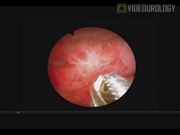
The aim of this educational video is to demonstrate safe and expeditious morcellation technique using the Wolf Piranha system, while also detailing many commonly encountered technical difficulties and tested methods to overcome them. In particular, tactics to address limited visualization and poor tissue-morcellator attachment are illustrated. An introduction to morcellator instrumentation and operating room setup is also discussed.
Results
: In a review of 1080 patients undergoing thulium laser vapoenucleation of the prostate, the median morcellation time was 11 minutes (8–20 minutes), median morcellation efficiency was 2.6 g/min (1.7–4 g/min), and median prostate volume was 51 mL (36–79 mL). Superficial bladder wall injury from morcellation requiring no treatment occurred in 15 (1.4%) patients, and there were no bladder perforations. Incomplete morcellation occurred in 16 (1.5%) patients and was completed during a second stage in all these patients.
Conclusions:
Following the herein described principles, morcellation can be efficiently and safely performed in patients with prostates of all sizes. The keys to morcellation success include keeping the bladder well distended, morcellating away from the bladder wall, being mindful of suction strength, and systematically trouble-shooting the morcellator handle and suction when experiencing inadequate tissue-morcellator attachment.
No competing financial interests exist.
Source of Funding: August Kurten Foundation.
Runtime of video: 6 mins 56 secs
Keywords
Get full access to this article
View all access options for this article.