





Abstract
Introduction:
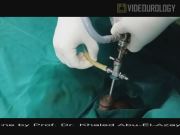
This video illustrates our technique for bipolar transurethral resection of the prostate (TURP) 1 and the sphincter irrigation test.
Materials and Methods:
A retrospective study of prospective data on 118 TURP procedures performed at our urology department in Saudi German Hospital–Jeddah, from October 2011 to October 2013, was conducted. Exclusion criteria were prostate cancer, previous prostate surgery, and preoperative urinary incontinence. Surgery was conducted under spinal or general anesthesia. The sphincter irrigation test was routinely performed before the start and at the end of the resection, and at any time needed during the resection (e.g., if the prostatic tissue exceeds the level of the verumontanum) to sharpen the surgeon's perception of the normal structures in this region, which enables contractile elements to be spared from resection. Our routine postoperative outpatient checkups were conducted every month for 3 months, then every 3 months for 1 year, and included, a thorough medical history, physical examination, bladder diary for the last 24 hours, urine analysis, uroflowmetry, and determination of residual urine volume.
The Sphincter Irrigation Test:
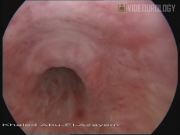
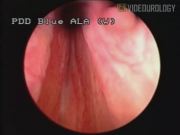
(testing the resting tone of the sphincter by means of a short on-off cycle of irrigation flow): The bladder is evacuated through the cystoscope sheath, then the cystoscope is withdrawn under vision 2 cm distal to verumontanum, watching the sphincteric segment of the membranous urethra under conditions of maximum irrigation inflow. When the irrigation hose is then rapidly pinched off, the urethral sphincter will return to its natural position, that is, it will resume its normal tone and thus somewhat impinge on the lumen of the urethra (positive test).
Results:
All patients (118 patients) showed a positive sphincter irrigation test, before starting and at the end of the resection with different degrees of coaptation after cessation of fluid flow, the worse the degree of postoperative continence, but one limitation of this test is that it cannot predict exactly the degree of postoperative continence. Among a total of 118 patients operated for TURP, 68 were completely continent after catheter removal, whereas 50 patients showed different degrees of urgency (32 patients) and mixed (18 patients) incontinence that improved spontaneously (for all patients) to complete continence within 10 to15 days. Only one patient (not included in our study, but included in our video: the fifth case), presented to us with post-TURP continuous dribbling. On diagnostic cystoscopy, 2 the patient showed a negative sphincter irrigation test, indicating the loss of urethral sphincteric action and poor continence.
Conclusion:
The sphincter irrigation test is a valid, save, easy (takes few seconds), and reproducible test. This dynamic method of examining the membranous urethra enables contractile elements to be spared from resection and helps urology surgeons to detect and avoid iatrogenic sphincteric injury during TURP.
The authors declare that no competing financial interests exist.
Runtime of video: 6 mins 19 secs
Keywords
Get full access to this article
View all access options for this article.