





Abstract
Introduction and Purpose:
“En bloc” resection of bladder tumors (ERBTs) is an innovative technique, which is shown to improve staging quality and reduce recurrence at early follow-ups. Outcome at mid- and long-term oncologic follow-up is still debated. The video describes our “en bloc” technique and provides an assessment of the quality of resection and of the mid-term oncologic outcome.
Materials and Methods:
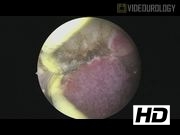
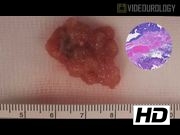
This video shows an observational prospective longitudinal study carried out at a tertiary high-volume University center from June 2010 to February 2014. Patients with first symptoms or with primary recurrence of clinically nonmuscle invasive bladder cancer (NMIBC), having tumors of ≤3 cm and ≤4 lesions, were enrolled. The surgical procedure was performed according to our standardized Institutional technique. A circular incision was made around the tumor with a Collins loop (J-electrode Collins loop: Storz 27040 L 24 CH), maintaining a distance of ∼5–10 mm from the tumor edge. This incision was carried out in macroscopically “normal” mucosa surrounding the base and then extending through the subepithelial connective tissue, muscularis mucosae, and muscularis propria layers throughout the detrusor muscle (DM). The lesion was detached from the bladder wall and the tumor was extracted using an Ellick evacuator. The primary study end point was recurrence-free survival. Secondary outcomes were feasibility, safety, the presence of DM, and the recurrence rate at the first follow-up (3 months) cystoscopy (RRFF-C). Statistical analysis was complemented with multivariable analysis. An expert uro-pathologist (P.C.) revised the samples according to the 1973 and 2004 WHO classification.
Results:
Of 87 enrolled patients, 2 showed a nontransitional cell carcinoma and 11 showed muscle invasive bladder cancer at the definitive pathology analysis. The study cohort consisted of 74 transitional cell carcinoma NMIBC cases, mean age 71±8 years, presenting with a mean tumor diameter of 2.05±0.63 cm and a median number of resected tumors per patient of 1 (range 1–4). The 2-year recurrence-free survival was 85.59%. All the ERBT samples showed the presence of DM and the RRFF-C was 5.4% (4/74). During multivariable analysis, only gender and the presence of carcinoma in situ were independent predictors of recurrence. The mid-term follow-up and the absence of a control group are the main limitations.
Conclusions:
Our findings confirmed the technical feasibility and safety of ERBTs with a recurrence-free survival of 85% after 2 years.
Acknowledgment:
Dana Kuefner revised the linguistic style and provided her voice for video.
No competing financial interests exist.
Runtime of video: 9 mins

Get full access to this article
View all access options for this article.