





Abstract
Introduction:
The flap valve technique for creating a continent urinary diversion was popularized by Paul Mitrofanoff. Several tissues may be used to create the catheterizable vesicocutaneous channel but most commonly used are appendix and small bowel. Urine leakage from the channel occurs in ∼4% of patients and is independent of the tissue utilized. 1 A leaking Mitrofanoff channel has traditionally been corrected by revision or re-creation of the stoma altogether. We describe a minimally invasive technique with successful medium-term results in 50% of patients.
Materials and Methods:
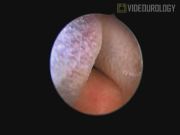
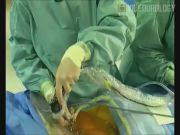
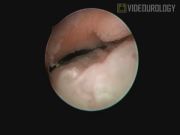
A 14F Storz® adolescent cystoscope is inserted into the Mitrofanoff channel and cystoscopy is performed paying particular attention to the open channel neck. Three syringes containing 1 mL Durasphere® are prepared. An 18-g/22-cm needle (comes with Durasphere kit) is inserted down the cystoscope channel and all the air is expelled. The Durasphere beads are injected submucosally in to the channel neck as shown in the video (between bladder and the Mitrofanoff channel). This is performed at three circumferential sites to ensure good coaptation. The procedure may be repeated if leaking continues or reoccurs. Six patients with this problem underwent bladder diary and urodynamic assessment to reveal good bladder capacity and compliance with demonstrable leakage from the Mitrofanoff without detrusor overactivity. All leaking channels were obstructed with a catheter balloon and filled further to ensure a minimum of 500 mL bladder capacity with no significant change in intravesical pressure. Postoperatively, all patients were interviewed with a bladder diary at 6–8 weeks to assess subjective success. Failures underwent further urodynamic assessment.
Results:
Of six patients, five were female. Underlying diagnosis was spina bifida (n = 3), bladder extrophy, spastic diplegia, and Fowler's syndrome. Only one of the six patients was dry after the first injection, one patient required two injections, and a third patient required three injections. Follow-up for the three successful cases is 7, 10, and 28 months. Three patients chose revision after two injections for ongoing leakage. Two patients have had surgical revision and are dry. One patient is still awaiting revision. Importantly, revision was not more difficult due to the Durasphere as this material had been encapsulated and cored out easily. No patients had difficulty in inserting a catheter into their channel.
Conclusions:
Mitrofanoff leakage is a difficult and uncommon problem to deal with and we have described a minimally invasive technique that can be used to treat this problem. The success rate of 50% reflects the minimally invasive nature of the procedure, but most importantly, there was no demonstrable morbidity with this technique. In addition, subsequent surgical revision was not affected. To the best of our knowledge, this technique has not been described in detail in the literature before, although it is reported to have been used in small numbers of patients. 2 The bulking agents used by various authors also differ and specific outcomes of this technique have not been reported yet. Therefore, we suggest that this technique has the potential to be the first-line treatment for a leaking Mitrofanoff channel but requires validation in larger numbers of patients with longer follow-up.
No competing financial interests exist.
Runtime of video: 4 mins 58 secs
Keywords
Get full access to this article
View all access options for this article.