





Abstract
Introduction:
Transurethral resection of the prostate (TURP) is a standard surgery to treat the cumbersome moderate-to-severe lower urinary tract symptoms secondary to benign prostatic hyperplasia with volume less than 100 mL. 1 Just after a deep resection of the prostate, the insertion of a Foley catheter could be very difficult or impossible while the stylet is being used. 2 We demonstrate a new technique to more easily insert the Foley catheter just after performing a TURP.
Materials and Methods:
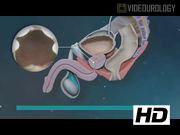
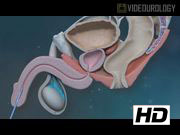
Among 141 men who underwent TURP by bipolar surgical unit (BSU), we found that 25 men experienced the Foley catheter getting stuck while being inserted in a conventional way. The reason was because the portion of the prostate just underneath the bladder neck was excessively resected. In those 25 men, we inserted a 20F-sized Foley catheter through a prostatic capsule, which is pushed along using a finger to press against the rectal wall. The novel technique uses the urethral catheter instead of the stylet. The urethral catheter is a new invention, which makes use of the flexibility of the catheter: a thread is hooked to the tip and passes through the entire length of the flexible catheter, which responds to the traction of the thread. We filmed the inside view of prostatic fossa by using a resectoscope through the opened bladder just after the suprapubic open prostatectomy, which is followed by the consecutive transurethral coagulation and adjustment with BSU. 3
Results:
For all cases of the 25 men concerned, by adopting this novel technique, the Foley catheter was completely inserted just after the TURP without any complication.
Conclusion:
The two techniques to insert the Foley catheter just after the TURP can be performed safely within the set time limit without having to use any other medical devices such as the stylet.
No competing financial interests exist.
Runtime of video: 3 mins

Keywords
Get full access to this article
View all access options for this article.