





Abstract
Introduction:
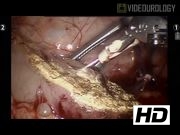
Partial nephrectomy (PN) has become the standard of care for management of a small renal mass. While robotic partial nephrectomy (RPN) has been widely adopted as a minimally invasive option, one concern is the long-term effects of prolonged warm ischemia time (WIT) on renal function and cardiac health. Multiple technological and procedural advancements have been proposed to limit WIT, but most are technically difficult to perform. Argon beam coagulation (ABC) can be used to coagulate the base of a tumor fossa before performing formal renorrhaphy. This may allow for improved hemostasis during deep hemostatic suturing, thus allowing for earlier hilar unclamping. We report our initial experience with ABC during RPN in a pig model, to test the feasibility of this technology for RPN.
Materials and Methods:
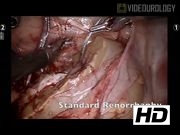
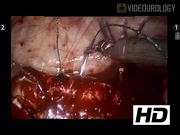
Six Yorkshire pigs underwent bilateral RPN using the Da Vinci Si Surgical System (Intuitive, Sunnyvale, CA). Because pig kidneys naturally bleed less than human kidneys, all pigs underwent systemic heparinization to simulate a human PN. After tumor excision, each pig underwent coagulation with the System 7550TM ABC (Conmed, Utica, NY) on one kidney and traditional renorrhaphy on the contralateral kidney. Kidney resection start/end time, hilum ready time, as well as total WIT and estimated blood loss (EBL) were recorded for each procedure.
Results:
Every PN was completed effectively. Mean WIT with traditional renorrhaphy was 7 minutes and 30 seconds, compared to only 4 minutes and 40 seconds in the ABC group (p=0.022), a difference of 2 minutes 50 seconds (38% reduction). There was no observed difference in EBL between the ABC and traditional renorrhaphy approach.
Conclusion:
ABC may allow for a standardized reduction in risk of injury to PN patients by minimizing technical difficulty and, in turn, WIT. The advantage of this approach is that it rapidly establishes hemostasis of the renal fossa, thus allowing for unclamping before placement of deep hemostatic sutures. ABC establishes early control of small venous bleeders, allowing the clamp to be removed early so that larger or arterial vessels can be controlled with renorrhaphy. Whether the deep hemostatic suturing is still necessary is still in question, but should be addressed in future animal studies by creating a third arm of study animals. In addition, future studies should compare blood loss between ABC and non-ABC off clamp, although the improved hemostasis of pig kidney may limit studies with blood loss as the primary outcome. Potential limitations of this technology are the inability to cauterize larger vessels and the potentially increased cost. Nonetheless, because the ABC method does not require surgeons to learn additional maneuvers, this approach may have broader applicability than some of the previous attempts at reducing WIT. Further study is required to determine the relative effect on renal function.
Daniel D. Eun is a consultant for Intuitive Surgical and a lecturer for Covidien. Andrew C. Harbin, Laura L. Giusto, Vincent S. Lee, Kumar Nadhan, and James Mooney have no competing financial interests that exist.
Runtime of video: 7 mins 9 secs
Keywords
Get full access to this article
View all access options for this article.