





Abstract
Introduction:
We present an updated version of our previously validated robotic partial nephrectomy (RPN) training model, 1,2 which includes the reconstructive part of the procedure in addition to the tumor excision component.
Material and Methods:
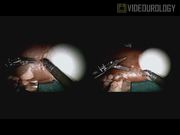
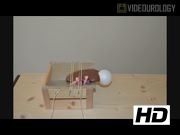
For this pilot series, participants were recruited as novice (zero console cases), intermediate (1, but <100 cases), and expert (≥100 console cases). After parenchymal resection with opening of the collecting system, a 5-cm Styrofoam ball mimicking a lower pole tumor was glued on an ex vivo porcine kidney. Each participant performed an RPN using the da Vinci SI Surgical System to excise the Styrofoam tumor. For reconstruction and hemostasis, two horizontal mattress sutures were applied. Renal artery and collecting system were perfused respecting physiologic conditions to test hemostasis and watertightness. Participants completed a poststudy questionnaire assessing training model realism and utility and were anonymously judged by expert reviewers using a validated laparoscopic assessment tool. 3 Focusing on expenses per kidney: the preparation time is around 10 min and the costs for disposables (tissue, Styrofoam ball, glue, and fixation) is ∼5 to 10 USD (without training instruments).
Results:
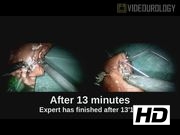
The 13 participants included 7 novices, 2 intermediates, and 4 experts. Overall, surgeons rated the training model as “very realistic” (median visual analogue score [VAS] 8/10) (face validity). Expert surgeons rated it as an “extremely useful” training tool for residents and attendings (median VAS 9/10) (content validity). 4 Experts outscored all others on overall performance (p<0.05) (construct validity). Additionally, the video displays in a head-to-head manner the way an expert surgeon outscores a novice on individual metrics. Thereby, model validation and training potential are demonstrated.
Conclusions:
Our perfused RPN training model has demonstrated face, content, and construct validity. Herewith tumors of any complexity and reconstruction can be simulated without patients at risk. In addition, the easy to build up, reproducible, and cheap model can be used, for example, within a residency training program. It allows to evaluate individual learning curves and to differentiate distinct surgical skills.
No competing financial interests exist.
Runtime of video: 7 mins 52 secs
Keywords
Get full access to this article
View all access options for this article.