





Abstract
Introduction:
Morbidity associated with traditional reconstruction of complex ureteral strictures has led to interest in applying the success of buccal graft urethroplasty to the ureter. Case reports suggest that this is a feasible technique, but it has never been reported in a minimally invasive repair. 1
Materials and Methods:
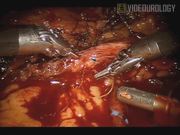
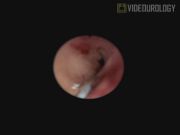
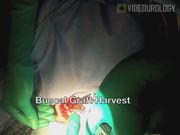
We performed robotic buccal mucosa graft ureteroplasty in a 24-year-old female presenting with a 6 cm left proximal ureteral stricture, which occurred after traumatic ureteroscopy. 2 Oral and abdominal procedures were performed synchronously. Positioning was a modified right lateral decubitus lithotomy with port placement similar to robotic pyeloplasty. The endotracheal tube was secured to the right side and the buccal graft taken from the left. The graft was sutured as a dorsal onlay and secured to an omental flap wrapped around the anastomosis. The flexible ureteroscope easily traversed the anastomosis. A Double-J stent, periureteral drain, and Foley were placed.
Results:
The operative time was 298 minutes, and the blood loss 75 mL. The patient had an uncomplicated recovery and was discharged on postoperative day 3. After 2 months, ultrasound showed mild pelviectasis and 3-month diuretic renal scan revealed prompt drainage. The patient was without pain or infection 8 months post-procedure.
Conclusions:
Buccal mucosa graft ureteroplasty is a promising option for complex proximal ureteral strictures. This technique is easily applied in minimally invasive surgery. Further study is needed to evaluate efficacy and morbidity compared to traditional techniques.
No competing financial interests exist.
Running time: 5 mins 59 secs
Keywords
Get full access to this article
View all access options for this article.