





Abstract
Introduction:
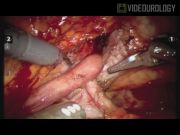
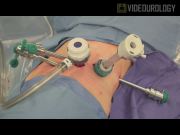
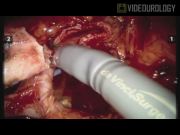
Robot-assisted laparoscopic surgery has been widely adopted for the surgical repair of ureteropelvic junction obstruction, and the majority of these pyeloplasty surgeries are performed by a transperitoneal approach. Retroperitoneal robotic surgery has been applied to renal surgery and offers direct access to the kidney, renal pelvis, and ureter. There are several theoretical advantages of the retroperitoneal approach. It avoids manipulation and potential injury of the bowel and adjacent organs, and in the event of urine leakage, any fluid will be collected and isolated within the retroperitoneum. In this video, we demonstrate the technique of retroperitoneal robot-assisted dismembered pyeloplasty with a crossing vessel. The patient is a 42-year-old woman with symptomatic left flank pain, hydronephrosis, and obstruction on diuretic renal scan.
Materials and Methods:
We collected the data from 64 consecutive patients, each with a primary ureteropelvic junction obstruction, operated between April 2012 and December 2013. Of those patients, 48 had a robotic transperitoneal pyeloplasty while the last 16 consecutive cases utilized a robotic retroperitoneal approach. The decision to transition to a retroperitoneal approach was initially based on surgeon's preference and presence of prior abdominal surgery and not impacted by patient's characteristics. All patients were operated by a single surgeon with the da Vinci Si system. There were no drains left in any of the cases. Information about perioperative data, complications, and postoperative functional outcome was collected.
Results:
When utilizing the transperitoneal approach, there was a median operative time of 192 minutes, mean estimated blood loss (EBL) of <50 mL, hospital length of stay of 1.1 days, and no complications. For the retroperitoneal approach, we found a median operative time of 162 minutes, EBL of <50 mL, hospital length of stay of 1.2 days, and one case was converted to an open pyeloplasty due to failure to progress. There was no significant difference between the transperitoneal and retroperitoneal approaches.
Conclusion:
Robot-assisted retroperitoneal laparoscopic pyeloplasty is feasible and technically possible for the repair of ureteropelvic junction obstruction. The retroperitoneal approach offers similar outcomes to transperitoneal surgery with a potentially shorter operative time and rapid identification of the ureteropelvic junction anatomy. Additionally, there is reduced bowel manipulation and risk of injury, and there is an isolated retroperitoneal space in the event of urine leakage.
The authors declare that no competing financial interests exist.
Runtime of video: 7 mins 24 secs
Keywords
Get full access to this article
View all access options for this article.