





Abstract
Introduction:
The laparoscopic approach has become the standard of treatment for performing nephrectomies, including live donors for transplant, radical procedures for treating renal masses, and simple for diseased poor functioning kidneys. Although many different energy sources have been developed, some of them are expensive and are not widespread available. With this video, we want to demonstrate the technical aspects of the use of the hook with monopolar as single energy source during laparoscopic nephrectomy.
Materials and Methods:
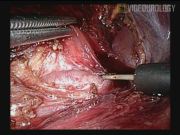
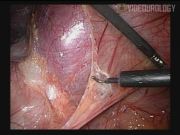
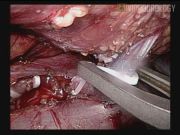
The main technical aspects include the following: (1) The use of monopolar generator at power settings of 50 ± 20 W of pure coagulation current can complete majority of electrosurgical procedures. If we use pure cutting mode, power settings of 90 W is recommended; however, there are more chances of bleeding in this mode. So, satisfactory cutting can be attained using electrodes like hook even in pure coagulation settings. (2) Holding the hook in pen-shape fashion close to the port, what gives stability to surgeon's hand and helps to avoid tremors. (3) Chances of surrounding tissue injury can be decreased by reducing the time for which current is being passed so foot pedal or hand piece should be triggered intermittently to deliver short bursts of energy. (4) As larger the surface area of contact of the instrument with the tissue, less precise the surgery becomes, so it is recommended to use the tip and the back side of hook for precise clean cuts and curved side (larger contact area) for coagulation. (5) Dissecting and hooking tissues to be sectioned and coagulated. (6) To achieve better cutting effect, the tissue should be put in tension. (7) If one notice decreasing electrosurgery efficacy at particular power settings or abdominal wall muscle twitching, suspect insulation break (most common cause of electrosurgical injury). (8) By using insulated instruments and avoiding hook contact with any metallic instrument within operative field, chances of direct coupling can be reduced. These elements are demonstrated in the video of a radical nephrectomy performed in a female patient, aged 18 years, with a history of right flank pain and palpable mass on physical examination. CT scan shows right renal tumor of 13.7 × 10.6 × 9.8 cm, suggestive of vascular angiomyolipoma, diagnosis confirmed by definitive histopathology report.
Results:
This video demonstrates the technique for laparoscopic nephrectomy using only hook with monopolar energy. Until date, we have registered 12 of these procedures in our center, including 7 radical and 5 simple nephrectomies. The mean operative time was 145 ± 65 minutes, with hemoglobin drop of 1.1 ± 0.52 g/dL and no intraoperative complications. The patient's hospital stay was 3.1 ± 1.4 days.
Conclusion:
The biophysics of monopolar energy is as important as the knowledge of anatomical planes for its safe use. The monopolar cautery offers the advantage of being a low-cost wide-available energy source and the hook can be used in different tasks, minimizing the change of instruments during the surgery. As a meticulous identification of the planes is required for its safe use, so acutely inflamed tissues should be avoided. The use of hook as single energy source during laparoscopic nephrectomy is feasible, safe, and inexpensive when performed by surgeons with laparoscopic experience for noninflammatory pathology.
Runtime of video: 7 mins 54 secs
Keywords
Get full access to this article
View all access options for this article.