





Abstract
Introduction and Aim of the Study:
Injury to the ureter is the most common urologic complication of pelvic surgery, with an incidence ranging from 1% to 10%. The aim of this video is to show a minimally invasive X-ray guided endoscopic procedure, named antegrade–retrograde ureteral rendezvous, in the management of this complication.
Materials and Methods:
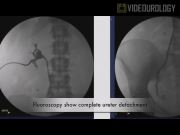
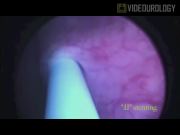
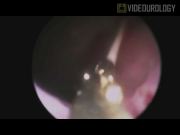
Two most representative cases selected from a case series of 18 treated patients with complete iatrogenic ureteral monolateral detachment have been selected. First case: A 42-year-old female with complete detachment of the left ureter secondary to a laparoscopic hysterectomy. After diagnosis achieved 7 days after surgery by computed tomography (CT), the patient underwent nephrostomy and positioning of a 0.035-inch j-shaped guidewire placed to reach the ureteral lesion. Under fluoroscopic monitoring, a rigid ureteroscopy through the distal stump of the ureteral lesion was then performed; the guidewire tail was caught with a grasping forceps, to realign the ureter with a Double-J 4.7F ureteral stent. Second case: A 30-year-old female with a complete left ureteral detachment after hysterectomy due to postpartum complications. A nephrostomy with a j-shaped 0.035-inch guidewire was placed through the proximal ureteral stump into the retroperitoneal space followed by the ureteroscopic retrieval of the guidewire end with the grasping forceps. In this case, the retrograde Double-J stenting was unsuccessful and therefore the Double-J stent was successfully passed through the trans-nephrostomic antegrade way. In both cases, the nephrostomy was removed 15 days after the procedure, the Double-J stent was left in the ureter for 3 months. The CT scan after stent removal showed the absence of leakage, hydronephrosis, and/or stricture.
Results and Interpretation of Results:
The antegrade–retrograde endoscopic rendezvous is a minimally invasive technique that allows restoring ureteral integrity avoiding invasive procedures even if in some cases it represents a challenging maneuver. 1,2 Our case series is represented by 18 procedures. In these patients, the CT control at the moment of discharge and after 6 months confirmed the restored ureteral integrity without leakage in 66% (14/18) of cases, while in 22% (4/18) of cases a ureteral stricture was diagnosed needing retreatment. Iatrogenic damage of the ureter is a severe complication, but unfortunately, only 1/3 of these lesions are recognized during surgery. An early diagnosis and treatment are crucial to enhance the chances of a successful mini-invasive cure. However, as suggested by some authors, it is advisable to protect the ureters (by ureteral stenting) before performing surgical procedures with high risk of injury. 3,4
Conclusions:
A combined antegrade radiological and retrograde endourological technique can restore ureteral continuity with Double-J stenting. This maneuver reduces the need of invasive surgical repair and it should represent the first therapeutic attempt before invasive procedures in patients with iatrogenic ureteral lesions.
The authors declare that no competing financial interests exist.
Runtime of video: 6 mins 2 secs
Keywords
Get full access to this article
View all access options for this article.