





Abstract
Objectives:
Intra- and postoperative patient safety remains the surgeon's responsibility. During robot-assisted laparoscopic prostatectomy, patients are vulnerable to neuropraxia especially affecting the shoulders and upper and lower limbs while in the Trendelenburg position. Cases of compartment syndrome have also been described. We share our unit's experience on how to reduce the occurrence of intraoperative neurovascular complications.
Methods:
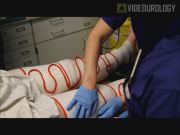
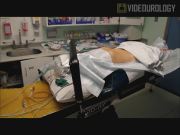
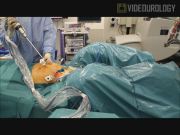
We have compiled a short but detailed video demonstrating how we position our patient preoperatively for a robot-assisted laparoscopic prostatectomy.
Results:
In the 4 years we have been running our robotic program, we have noted five cases of self-limiting postoperative arm and leg neuropraxia and two cases requiring fasciotomy for suspected compartment syndrome. Only one case was a true compartment syndrome, as the other was negative on exploration. Our unit continued to work on our technique that was perfected at around patient number 180. Data from our first 400 cases showed the complications to occur in the first 200. In the following 200 cases, there was no incidence of neuropraxia or compartment syndrome. Through this easily reproducible technique, we have eliminated the incidence of neuropraxia and compartment syndrome.
Conclusion:
Patient safety should never be compromised during robotic-assisted laparoscopic prostatectomy. Through a well-prepared reproducible team approach, we can prevent neurovascular injuries. This video should be especially useful if you are embarking on a robotic program, taking on more complex cases with protracted operative time or if you have noted any of the above-mentioned complications. It should enable clinicians to reduce postoperative morbidity and facilitate timely discharge.
No competing financial interests exist.
Runtime of video: 3 mins 15 secs
Keywords
Get full access to this article
View all access options for this article.