





Abstract
Background and Objectives:
Radiation is one of the occupational hazards urologists are exposed to during their day-to-day practice. Excessive radiation exposure is associated with multiple short- and long-term consequences. This educational video demonstrates the important measures urologists could undertake to protect patients, themselves, and other healthcare professionals from excessive radiation exposure without compromising outcomes.
Methods:
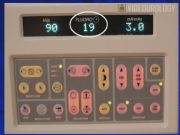
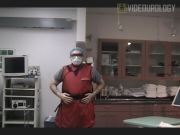
As Low As Reasonably Achievable principles, including minimizing time, maximizing distance, and always using shields, are demonstrated. Intraoperative tricks to minimize radiation exposure are recommended, including using the foot pedal to activate fluoroscopy by the surgeon himself/herself, using pulsed fluoroscopy, and documenting fluoroscopy time. In addition, the American Urological Association (AUA) guidelines regarding imaging modalities used for follow-up of urolithiasis are reviewed.
Results:
Surgeon behavior is one of the important modifiable predictors of fluoroscopy time during endourological procedures. In one study, fluoroscopy time during ureteroscopy was reduced by 24% by simply providing periodic feedback consisting of each urologist's mean fluoroscopy time compared with his peers. 1 In a survey of endourologists, there was good compliance (97%) with chest and pelvic shields. However, their compliance with other radiation safety measures needed to be improved. 2 Similar to surgeon behavior, there were significant differences among postgraduate trainees 3 and radiological technologists 4 in their use of fluoroscopy during ureteroscopy and shockwave lithotripsy, respectively. When compared with standard fluoroscopy at 30 frames per second, pulsed fluoroscopy at 4 frames per second significantly decreased fluoroscopy times by more than 60% during ureteroscopy and percutaneous nephrolithotomy. 5 Finally, the 2012 AUA guidelines recommended low-dose CT scan protocols instead of standard CT scans in thin patients with body mass index <30 kg/m2. 6 Furthermore, patients with radio-opaque stones should be followed with plain radiographs with ultrasonography rather than CT scans to minimize radiation exposure. 6
Conclusion:
Radiation exposure is a hazard to healthcare professionals and patients. We can all do our part to minimize radiation to our patients and ourselves.
Acknowledgments:
This work was supported, in part, by the Canadian Urological Association Scholarship Foundation and the Montreal General Hospital Foundation Awards to Sero Andonian.
No competing financial interests exist
.
Runtime of video: 9 mins 20 secs
Keywords
Get full access to this article
View all access options for this article.