





Abstract
Introduction and Objectives:
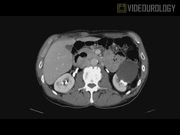
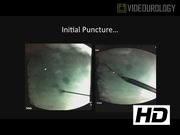
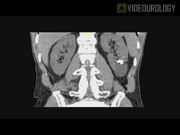
Percutaneous nephrolithotomy (PCNL) remains the mainstay modality for large burden kidney stone management. Access to the pelvicaliceal system is the key step for success of PCNL for complete stone clearance and minimal complication. However, many times in cases of impacted stones, staghorn calculi, nondilated pelvicaliceal systems, or thin renal cortex, it becomes difficult to establish a tract into the calix after initial puncture and the procedure may have to be abandoned. In this video, we present our technique of intrarenal dissection to salvage difficult cases using standard PCNL instruments.
Methods:
We performed this novel technique in nine patients with staghorn stones or impacted caliceal stones. As per the standard PCNL protocol, fluoroscopic-guided puncture and guidewire placement into the collecting system are performed; then, the tract is dilated with a balloon or Amplatz Dilators and a sheath is placed. A nephroscope is passed under direct vision and an atraumatic forceps is used to gently dissect the renal capsule and parenchyma until the calix is entered. Standard PCNL is then performed with stone fragmentation and extraction and placement of a small bore nephrostomy tube when indicated.
Results:
We used this novel technique in nine patients where it was difficult to do standard tract dilatation and successfully established access and a stable tract into the pelvicaliceal system. There were no complications with this technique. We do 15 to 30 PCNL cases per month and out of this, 40% are difficult cases where we need to use this technique. We were able to salvage the tract and successfully clear stones in all the cases with this technique in impacted staghorn cases, except one who had scarred parenchyma. There was no adverse postoperative outcome related to this technique.
Conclusions:
This novel technique of intrarenal dissection for tract/access to the pelvicaliceal system is feasible, safe, and effective and does not increase morbidity in patients with impacted stones, staghorn calculi, or nondilated collecting systems to salvage underdilated tract.
No competing financial interests exist.
Runtime of video: 5 mins 25 secs
Keywords
Get full access to this article
View all access options for this article.