





Abstract
Introduction:
Extended pelvic lymph node dissection (PLND) during radical cystectomy may be important not only for improved staging, but also for a survival benefit. To assess the utility of robotic surgery in lymph node dissection, we evaluated the feasibility, safety, and efficacy of extended PLND in patients undergoing robot-assisted laparoscopic radical cystectomy (RARC) for urothelial carcinoma of the bladder.
Materials and Methods:
Thirty-six patients with invasive urothelial carcinoma of the bladder underwent extended PLND during RARC by a single surgeon between March 2011 and December 2012. Preoperative, intraoperative, and postoperative parameters were recorded and analyzed.
Surgical Technique:
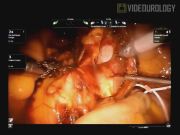
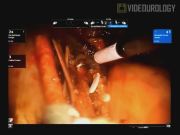
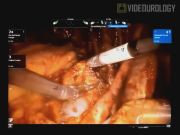
Extended PLND was performed following radical cystectomy incorporating a template dissection using as boundaries, the node of Cloquet distally, genitofemoral nerve anteriorly, iliacus muscle laterally, hypogastric vessels inferiorly, and aortic bifurcation proximally, including the presacral region. In select cases, when suspicious nodes at the common iliac artery were encountered, para-aortic and precaval lymph nodes to the level of the inferior mesenteric artery were incorporated.
Results:
The median age at surgery was 70 years (interquartile range [IQR]: 63–77), with median body mass index at 25 kg/m2 (IQR: 23–27). The median estimated blood loss was 200 mL (IQR: 100–400) and the transfusion rate was 11% for the entire surgery. The median length of hospital stay was 9 days (IQR: 7–13). No complications attributed to the node dissection occurred, including obturator nerve injuries or clinically significant lymphoceles. A median number of 31 nodes (IQR: 24–40) were harvested in 36 patients. Of these patients, there were 24 (67%) who were node-negative and 12 (33%) who were node-positive. There were 17 (47%) patients with T3/T4 pathologic stage, of which, nine were node-positive. The node-positive rates were higher in T3/T4 stage patients (
Conclusions:
Extended PLND during RARC is technically feasible and safe. As a surrogate to long-term survival, comparable lymph node yields may be achieved with a thorough extended lymph node dissection in patients undergoing RARC.
Runtime of video: 8 mins 40 secs
Keywords
Get full access to this article
View all access options for this article.