





Abstract
Introduction:
The pediatric percutaneous nephrolithotripsy is not a frequently adopted procedure because of low incidence of stone disease in this age, but the endourological resolution is anyway to consider as the first choice for a less invasive approach; these patients are exposed to an high incidence of lithiasic recurrences and surgical treatments too.
Materials and Methods:
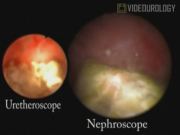
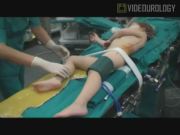
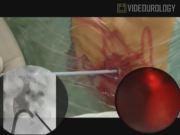
The patient was a 4-year-old girl with a left 3-cm burden pielic stone with a 7-mm fragment in the lower calyx. The patient was in the supine percutaneous position, which allows the contemporaneous use of flexible uretheroscope (positioning as first step) for the selection of the correct calyx for percutaneous puncture (Endovision procedure). The direct control of needle's perforation of renal papilla confirms or excludes the first biplanar X-ray guidance and confirms the correct site of penetration, which reduces the risk of hemorrhagic complication. The nephrostomy dilation was performed with a 14F MINI-percutaneous set with hydrophilic teflonate coaxial dilators. 1 We used light amplification by stimulated emission of radiation (LASER) lithotripsy and grasping/basket removers. We left a 12F nephrostomy catheter and a 4.8F mono-J ureteral stent.
Results and Conclusions:
The children were stone free; the nephrostomy tube was removed after 2 days, and the mono-J, after 24 hours. X-ray exposure was 1 minute 35 seconds. No bleeding or infection complications occurred. 2–3 In adults, as in the children, the supine position presents different advantages: optimal decubitus can be assumed by the awake patient; no risk of traumatisms caused by bed-position (standard prone procedure); no thoracic compression occurs; colon perforation risk is reduced; contemporary dominion of urinary tract, retrograde ureteroscopical and anterograde percutaneous with rigid and flexible instruments makes clearance of stone fragments easier, even in particularly difficult cases. During LASER lithotripsy, the irrigation through ureteral way allows exit of stone fragments because of gravity and maintains low intrarenal pressures during surgical time. We believe that supine percutaneous technique in pediatric patients is a safe, effective, and feasible procedure. 4
No competing financial interests exist.
Runtime of video: 6 mins 20 secs
Get full access to this article
View all access options for this article.