





Abstract
Introduction and Objective:
A novel, double-layered, coated self-expandable mesh ureteral stent (UVENTA™ Taewoong Medical, Korea) is reported to be a safe and effective palliative treatment for malignant ureteral obstruction with acceptable encrustation and migration rates. 1 We report the use of UVENTA serving as an artificial ureter in a patient of iatrogenic left lower ureteral loss following extensive pelvic surgery.
Material and Methods:
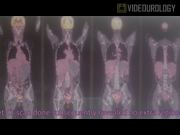
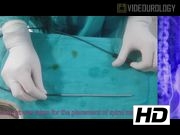
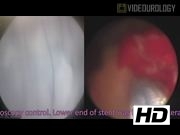
A 42-year-old female underwent posterior exenteration surgery for locally advanced large necrotic soft tissue mass arising from the lower uterine segment and cervical region, encasing the left lower ureter and infiltrating vagina and anorectum. Postoperatively, she developed copious urine leakage (1–1.5 L/day) through the drain site. CT urography revealed extravasations at the juxtavesical region of left lower ureter. Retrograde ureterography and ureteroscopy confirmed ureteral loss, and the severed upper end of the ureter was not traceable. Bridging of transacted ureteral ends was achieved by combined ante- and retrograde (Rendezvous technique) alignment with initial Double-J stent placement and then replacement a week later by a spiral stent (Memokath 051; 10.5F/150 mm). However, following chemoradiation, this spiral stent also started leaking and the patient had recurrent malignant ureterovaginal fistula with total incontinence. PET-CT scan done post-chemoradiation revealed an irregularly marginated heterogeneously enhancing lesion with areas of hypodensity suggestive of necrosis, measuring ∼2.2 × 1.6 cm on the left side of the pelvis, closely abutting the left pelvic wall encasing the left distal ureter. Contrast was seen to track inferiorly from the left ureter to the left pelvic floor, posterior to the urinary bladder, representing uterovaginal fistula. Then, we planned the placement of multilayered self-expanding metallic stent (UVENTA) across the fistula.
Results:
The mean operative time was 35 minutes with no significant blood loss. Urinary leak stopped immediately after placement of the multilayered stent, which was not initially controlled by placement of the Double-J stent and partially by the Memokath metallic stent. Broad-spectrum antibiotic coverage helped the patient to eradicate infection, and the patient was discharged from the hospital on the third postoperative day. Renal functions were normal and cultures were sterile at discharge. She rejoined as school teacher after 14 days.
Conclusion:
To our knowledge, we describe the initial application of these two types of stent in iatrogenic ureteral injury. These nonporous PTFE membranes sandwiched between two layers of nickel–titanium (nitinol) metallic mesh (UVENTA) are an effective alternative to immediate reconstructive surgery, which may not be feasible under such circumstances.
No competing financial interests exist.
Runtime of video: 6 mins 59 secs
Get full access to this article
View all access options for this article.