





Abstract
Introduction:
Paraureteric diverticulum results from protrusion of mucosa through the detrusor muscle fibers at the ureteric hiatus and demands attention in view of recurrent urinary infection, ureteral obstruction, bladder outlet obstruction, or vesicoureteral reflux. Among the various treatment modalities, laparoscopic approach has been appraised for excellent morbidity profile. Only limited cases of laparoscopic bladder diverticulectomy have been reported thus far. 1 We present a 5-minute 43-second video of laparoscopic bladder diverticulectomy for paraureteric diverticula in a 2-year-old boy.
Methods:
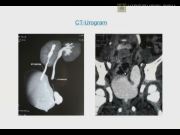
Patients were selected after detailed evaluation, including presenting complaints, clinical parameters, and blood profile. The imaging protocol included ultrasonogram (USG), voiding cystourethrogram (VCUG), computed tomogram urography, or magnetic resonance urogram. Renogram was performed to ensure salvagability of the pathological renal unit. Preoperative cystoscopy was performed in all cases. Patients were positioned in Trendelenberg decubitus with shoulder support. Four ports were utilized: one 10-mm camera port and three 3-mm working ports. The diverticulum was excised starting from apex. Simultaneously, the diverticular defect was closed to avoid recession of the bladder mucosa. After complete excision of the diverticulum, the ureter was freed from the diverticulum. Bladder was then mobilized. Buttonhole cystotomy was constructed and uretreic reimplantation was performed with placement of a ureteral stent across the ureterovesical anastomosis. An extravesical tunnel was then created and antireflux performed following the Lich Gregoir principle. Postoperatively, patients were allowed orally once comfortable and discharged home once fully ambulatory. Operative and postoperative parameters were recorded. Ureteral stents were removed at 6 weeks. All patients underwent 3 monthly follow-up. At 6 months and 1 year USG and VCUG were repeated.
Results and Discussion:
From January 2006 to January 2010, three cases of laparoscopic diverticulectomy were performed for paraureteric diverticula. Mean age was 32 months. All patients were males. Mean body mass index was 16.44 kg/m2. Presenting complaints were recurrent urinary infection (n = 3). All procedures were completed via laparoscopic approach. Mean operation duration was 131.67 minutes, and mean blood loss was 50 mL. Mean duration of hospital stay was 2.5 days. No major intraoperative or postoperative happenings were recorded. All patients were asymptomatic at follow-up with stable renal profile. Follow-up VCUG was normal in all. Conventionally, bladder diverticula are addressed through incisional approach. Laparoscopic diverticulectomy has been performed by limited operators till date. 2 Even in the pediatric age group, the procedure is technically feasible and safe. The morbidity profile is excellent and the outcome achieved is at par to that obtained through incisional approach. The operator needs to be well versed with pelvic anatomy and proficient in laparoscopic exercises.
No competing financial interests exist.
Runtime of video: 5 mins 43 secs
Get full access to this article
View all access options for this article.