





Abstract
Background and Purpose:
Minimally invasive approaches to manage bladder diverticula have become increasingly popular; however, intracorporeal identification of bladder diverticula may be challenging. We report a novel technique for diverticular illumination using flexible cystoscopy.
Patients and Methods:
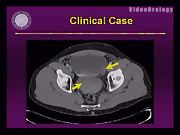
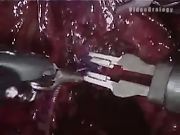
After management of bladder neck obstruction, two patients with bladder diverticula and persistent lower urinary tract symptoms underwent robot-assisted bladder diverticulectomy. Cystoscopic illumination was used in both cases to aid diverticular identification and dissection. This video illustrates the steps of this approach in a patient with a 7 cm posterior and a 3 cm left lateral diverticulum. The steps include (1) externalized ureteral stent placement; (2) placement of laparoscopic ports in a configuration similar to that required for robotic cystectomy; (3) incision of peritoneum overlying posterior bladder; (4) exposure of diverticulum; (5) transurethral insertion of a flexible cystoscope into the diverticulum for transillumination and identification of the diverticular wall; (6) diverticular dissection down to its ostium; (7) transection of diverticulum at its ostium; (8) bladder closure in two layers; (9) confirmation of water-tight closure with bladder distension; and (10) insertion of Foley catheter and perivesical drain.
Results:
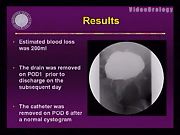
The perivesical drain was removed on postoperative day 1 and the patient was discharged on postoperative day 2. A cystogram on day 6 revealed no evidence of residual diverticula or leak, and the Foley catheter was removed.
Conclusions:
Our technique was simple to perform and facilitated identification and dissection of bladder diverticula. Cystoscope-assisted illumination provides a straightforward method of identifying bladder diverticula during robot-assisted laparoscopic diverticulectomy.
Runtime of video: 3 min 55 sec
Get full access to this article
View all access options for this article.