





Abstract
Introduction and Objective:
A previous study by Wang et al. 1 has shown possible benefits to robot-assisted microsurgical subinguinal varicocelectomy (RAVx) over the standard microsurgical approach. This video presents a detailed technique guide for RAVx and presents our initial human results.
Methods:
A four-arm technique for RAVx was developed utilizing the DaVinci-type-S high-definition robotic platform. The outcomes of our initial 46 human RAVx cases from June 2008 to September 2009 (mean follow-up 3 months: range 115) were also reviewed.
Results:
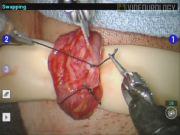
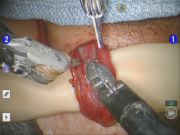
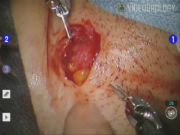
This video presents a step-by-step technique guide for RAVx. Mean duration per side was 38 minutes (25–80). Indications for the procedure were the presence of a grade two or three varicocele and the following conditions: 4 with azoospermia, 25 with oligospermia, and 17 with testicular pain (failed all other conservative treatment options). Three-month follow-up was available for 23 patients: 76% (13 patients) with oligospermia had a significant improvement in sperm count (3 achieved a pregnancy), and 3 with azoospermia remain unchanged. For testicular pain: 88% (15/17 patients) had complete resolution of pain. One recurrence or persistence of a varicocele occurred (by physical and ultrasonography examination) and one patient developed a small postoperative hydrocele. The fourth robotic arm allowed the surgeon to control one additional instrument during the cases decreasing reliance on the microsurgical assistant. The fourth arm also enabled the surgeon to perform real-time intra-operative Doppler mapping of the testicular arteries while dissecting the veins with the other arms if needed. Additionally, similar technique is used to easily identify and dissect the vas deferens as with robotic prostatectomy to prevent injury to the vas deferens. There are several advantages to using a robotic approach. First, since the robot has three instrument arms, the surgeon does not need a skilled microsurgical assistant; consequently, there is improved efficiency with less instrument changes. Also, rapid and efficient tying of suture knots to tie off the veins can be easily performed by the surgeon without the need for extensive microsurgical training. Third, the use of the fourth instrument arm to hold the Micro Doppler to continuously monitor the artery while simultaneously performing vein dissection close by with the two other robotic arms provides a the surgeon with added functionality that cannot be done using standard microsurgical techniques without the aid of a skilled microsurgical assistant. Lastly, the ergonomic ease of use for the microsurgeon with the robotic platform allows surgeons to perform more microsurgical procedures with less fatigue. One of the authors (S.P.) has been able to improve microsurgical case loads in the operating room from two to three standard microsurgical cases to up to six robotic microsurgical cases using a single room, single team, and robotic system.
Conclusion:
RAVx appears to be feasible. The four-arm robotic approach allows the microsurgeon to maneuver multiple instruments simultaneously including a micro-Doppler probe. The preliminary human results appear promising. Further evaluation and follow-up is warranted.
No competing financial interests exist.
Runtime of video: 5 mins 30 secs
Get full access to this article
View all access options for this article.