






Abstract
Introduction:
Chronic orchialgia continues to be a challenge for urologists to treat and for patients to live with. Currently, conservative treatment (rest, anti-inflammatory drugs, physical therapy, and antidepressants) is the first-line therapy for men struggling with chronic orchialgia. 1 However, when these approaches fail, alternative therapies are required. Before resorting to orchiectomy, microsurgical spermatic cord denervation (MSCD) has been shown to significantly decrease pain with few side effects for the correctly selected patient. 2 Accurate microsurgical technique and especially avoidance of arterial injury is critical, especially for novice surgeons as well as in cases with aberrant anatomy. In this video presentation, we describe the novel use of indocyanine green (ICG) angiography in correlation with Doppler during robotic MSCD for the purpose of arterial localization and verification of preservation.
Methods:
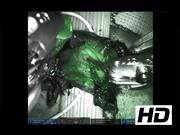
Robotic MSCD was performed in 10 cases of chronic orchialgia after failed conservative treatment and after an effective anesthetic cord block in the office. The procedure consists of a few distinct steps: division of the cremasteric muscle, isolation of the vas deferens and division of the central adipose tissue. ICG was injected twice in each procedure: to identify the testicular artery during central dissection and to confirm preservation of the artery at conclusion. Micro-Doppler was used adjunctly to confirm findings.
Results:
In all 10 patients, ICG angiography identified the location and course of the testicular artery, including in cases of aberrant and reoperative anatomy. Doppler assessment confirmed this.
Conclusion:
ICG angiography during robotic MSCD is a novel technique to clarify spermatic cord arterial anatomy and is especially useful in the setting of prior surgery and developmental abnormality. This technique is a valuable adjunct to this procedure for novice surgeons, as well as producing visual documentation of arterial preservation, without adding significant time or complication.
Authors have received and archived patient consent for video recording/publication in advance of video recording of procedure.
No funding was received for this article.
No competing financial interests exist.
Runtime of video: 7 mins and 53 secs

Keywords
Get full access to this article
View all access options for this article.