





Abstract
Introduction:
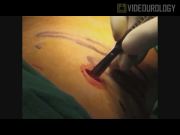
Retroperitoneal laparoscopy for the kidney is a well-established approach to perform a variety of ablative and reconstructive procedures for different pathologies. This approach has several advantages, allowing direct posterior access to the kidney circumventing peritoneal cavity and a more immediate path to the renal hilum. In this video (running time of 15 min) the retroperitoneal laparoscopic approach is exhibited, including the creation of retroperitoneal space and the operative technique of various surgical procedures.
Methods and Materials:
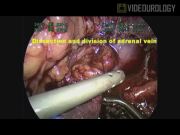
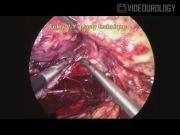
We utilize portions of four different cases to illustrate the following: the key steps of creating the retroperitoneal space, the use of indigenous and commercial balloons, the utilization of different energy sources for dissection, the different techniques to control the renal hilum, the repair of an inferior vena cava injury, and the comparison between the Anderson-Hyne's and Foley's Y-V pyeloplasty.
Results and Conclusion:
Retroperitoneoscopic surgery is an excellent approach for a variety of surgical interventions. The techniques can be tailored to the desired indication to provide successful culmination. The learning curve can be shortened by adequate training and, subsequently, with experience, this can be used proficiently. Despite the limitation of working space, a direct posterior access to the kidney and renal hilum make this access attractive. Emerging techniques such as single port or single incision can also be performed. Further, reproducibility of this technique worldwide has been a testimony to its successful utilization.
No competing financial interests exist.
Runtime of video: 15 mins
Keywords
Get full access to this article
View all access options for this article.