





Abstract
Objectives:
Percutaneous nephrolithotomy (PCNL) is commonly performed for the treatment of large renal calculi and staghorn stones. Knowledge of renal anatomy is essential to ensure a bloodless field and to minimize patient morbidity and iatrogenic organ injury. We describe our technique in detail and demonstrate a prone-flexed modification, which has several advantages over conventional prone positioning.
Methods:
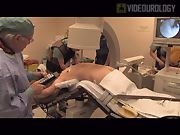
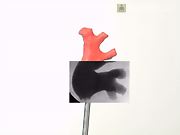
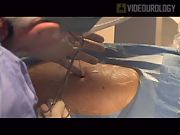
At our institution, PCNL is routinely performed with the patient in the prone position with an additional 30° to 40° flexion at the hip. After the retrograde injection of contrast, we performed selective puncture through the center of a posterior calyx using the bullseye technique.
Results:
Conventional prone positioning for PCNL has several advantages over other patient positions, including a wide field for posterior puncture, a wide space for instrument manipulation, easy access to the upper pole, and a dependent renal pelvis where mobile stones collect, facilitating removal. A simple prone-flexed modification further flattens the flank, increasing the area available for puncture and decreasing instrument conflict with the buttocks during lower pole access.
Conclusions:
Prone-flexed positioning is a simple modification that provides improved access to the upper pole and more mobility for lower pole PCNL. This position is well tolerated and has several advantages over conventional prone positioning.
The complete abstract and author disclosures are no longer available.
Runtime of video: 4 min 16 sec
Keywords
Get full access to this article
View all access options for this article.