






Abstract
Introduction:
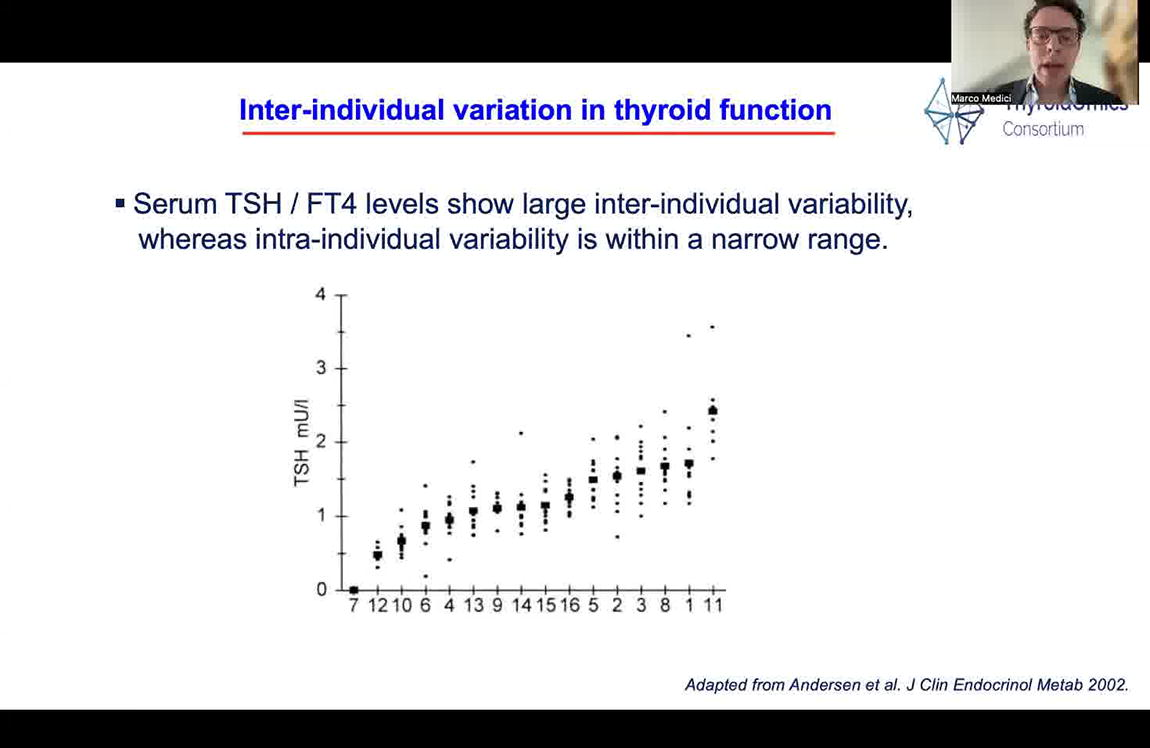
Serum thyroid-stimulating hormone (TSH) measurement is the diagnostic cornerstone for primary thyroid dysfunction. There is high inter-individual, but limited intra-individual variation in TSH concentrations, largely due to genetic factors. The currently used wide population-based reference intervals may lead to inappropriate management decisions.
Methods:
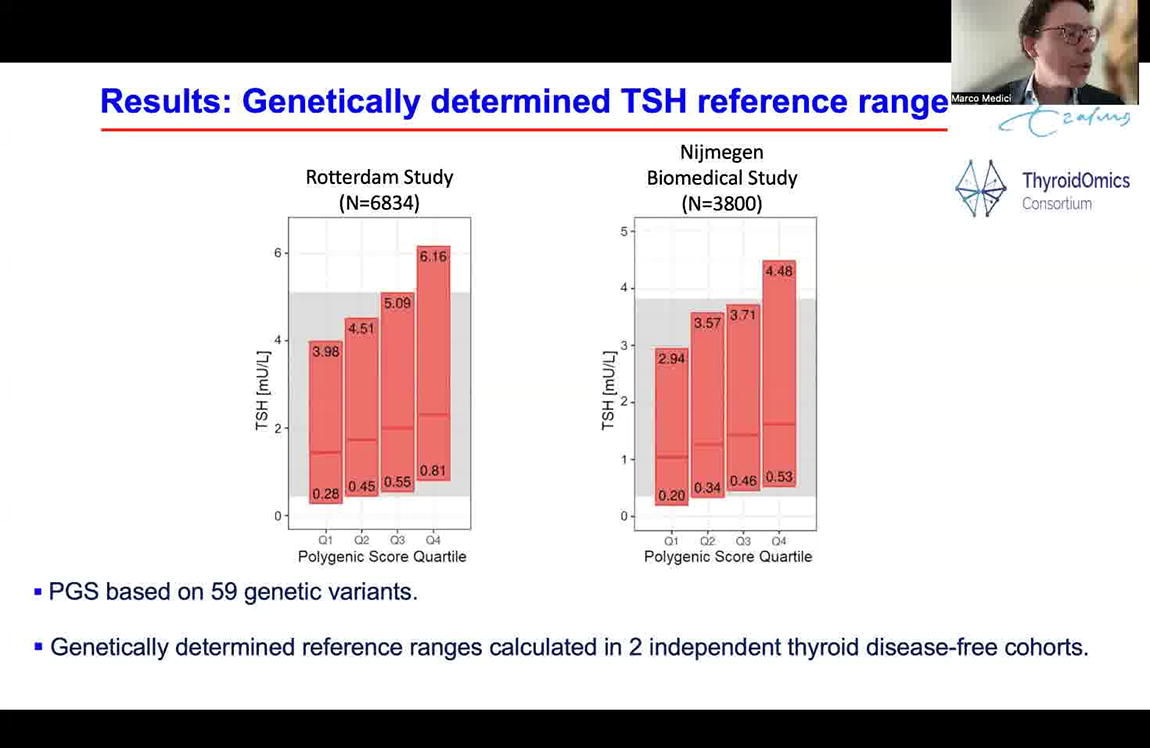
A polygenic score (PGS) including 59 genetic variants was used to calculate genetically-determined TSH reference ranges in a thyroid disease-free cohort (N = 6834). Its effect on reclassification of diagnoses was investigated when compared to using population-based reference ranges. Next, results were validated in a second independent population-based thyroid disease-free cohort (N = 3800). Potential clinical implications were assessed in a third independent population-based cohort including individuals without thyroid disease (N = 26,321) as well as individuals on levothyroxine (LT4) treatment (N = 1132).
Results:
PGS was a much stronger predictor of individual TSH concentrations than FT4 (total variance in TSH concentrations explained 9.2%–11.1% vs 2.4%–2.7%, respectively) or any other non-genetic factor (total variance in TSH concentrations explained 0.2%–1.8%). Genetically-determined TSH reference ranges differed significantly between PGS quartiles in all cohorts, while the differences in FT4 concentrations were absent or only minor. Up to 24.7%–30.1% of individuals, previously classified as having subclinical hypo- and hyperthyroidism when using population-based TSH reference ranges, were reclassified as euthyroid when genetically-determined TSH reference ranges were applied. Individuals in the higher PGS quartiles had a higher probability of being prescribed LT4 treatment compared to individuals from the lower PGS quartiles (3.3% in Q1 vs 5.2% in Q4, Pfor trend = 1.7 × 10⁻⁸).
Conclusions:
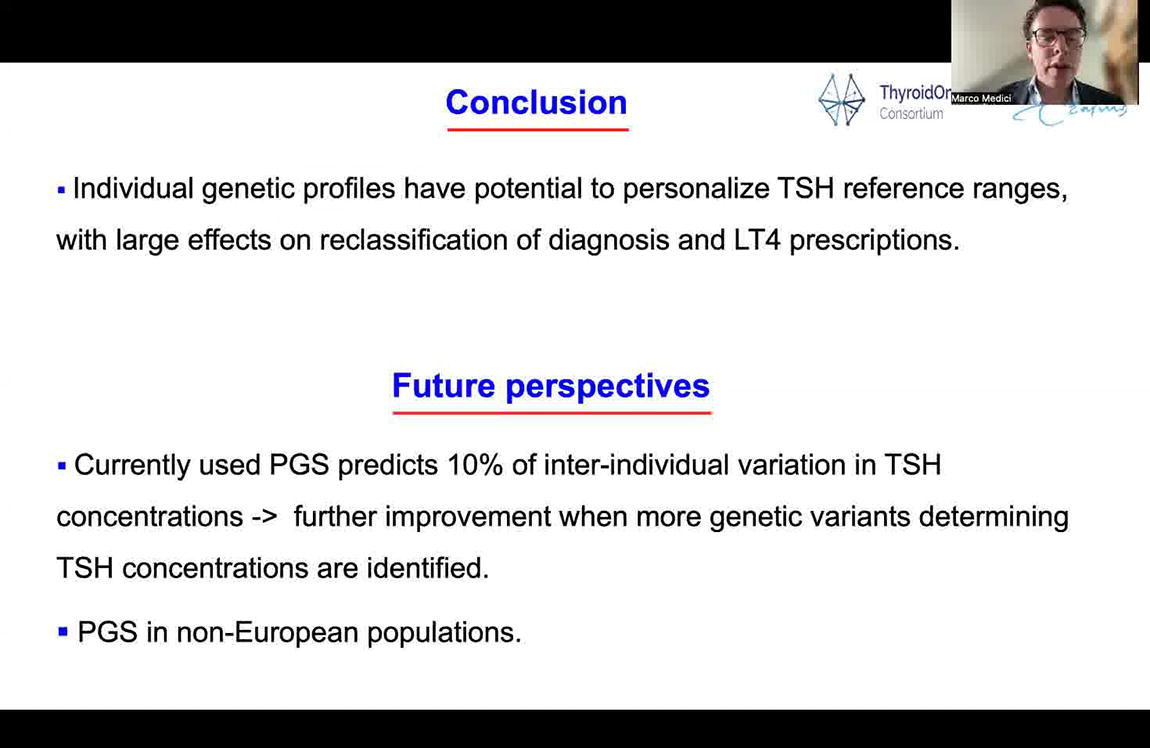
Individual genetic profiles have potential to personalize TSH reference ranges, with large effects on reclassification of diagnosis and LT4 prescriptions. As the currently used PGS predict approximately 10% of inter-individual variation in TSH concentrations, it should be further improved when more genetic variants determining TSH concentrations are identified in future studies.
Acknowledgment:
This video is a discussion of Towards Personalized TSH Reference Ranges: A Genetic and Population-Based Approach in Three Independent Cohorts, which was previously accepted at the Thyroid Journal. It can be found at https://www.liebertpub.com/doi/10.1089/thy.2024.0045.
Disclosure Statement:
No competing financial interests exist for any of the authors.
Runtime of video: 8.38 min.
Get full access to this article
View all access options for this article.