






Abstract
Introduction:
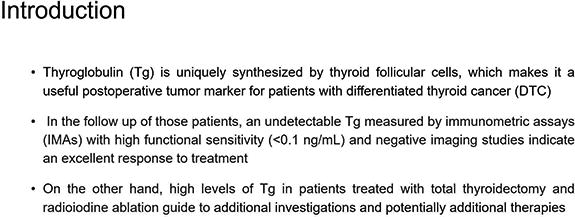
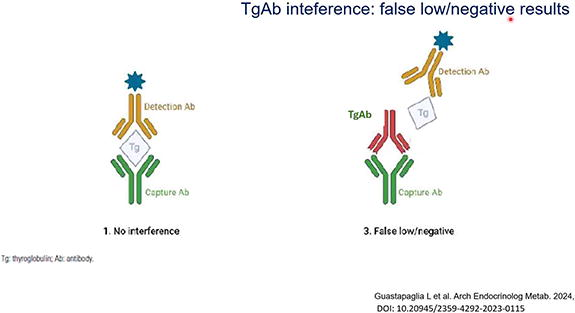
Thyroglobulin (Tg) is exclusively produced by thyroid follicular cells, which makes it an essential useful postoperative tumor marker, for patients with differentiated thyroid cancer. In the follow-up of these patients, an undetectable Tg levels and negative imaging studies indicate an excellent response to treatment. However, some pitfalls can lead to falsely high, low or undetectable Tg readings. The presence of thyroglobulin antibodies (TgAb) can cause either falsely low or high Tg values, while the presence of heterophile antibodies (HAb) can lead, more frequently to false-positive results.1–9
Case Report:
A 36-year-old woman underwent total thyroidectomy in 2008. Histological findings identified a 0.9 cm micro papillary thyroid carcinoma. She was considered to have an excellent response to treatment. However, after 9 years of follow-up, high Tg values were observed both during levothyroxine therapy and after TSH stimulation. WBS and neck ultrasound were performed and resulted negative. Since the Tg levels were inconsistent with the ongoing follow-up, the interference in Tg measurement was considered.
Methods:
The potential interference by TgAb, biotin use, and HAb was investigated.
Results:
The TgAb measurement was negative, ruling out TgAb interference. Regarding biotin, if the patient had been taking it, a decrease in Tg levels would have been expected rather than an increase. Lastly, the workup of samples with suspected heterophile antibodies was conducted: Tg measurement after serial dilutions was not effective in this case, and the pretreatment with HAb blocking reagents was not available. The undetectable Tg measurement obtained through a different immunoassay platform and liquid chromatography-tandem mass spectrometry indicated interference from HAb.
Conclusion:
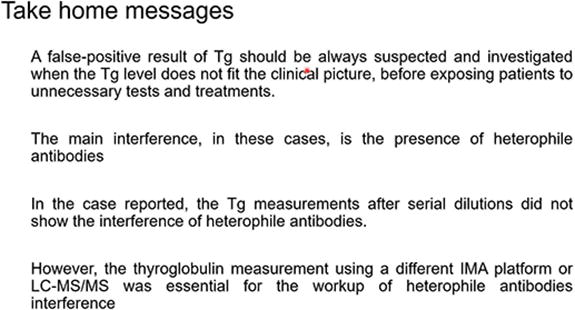
A false-positive Tg result should always be suspected and investigated when the Tg level does not fit the clinical picture, before exposing patients to unnecessary tests and treatments. The most common interference in such cases is due to heterophile antibodies.
Disclosure:
no potential conflict of interest relevant to this article was reported.
Get full access to this article
View all access options for this article.