






Abstract
Abstract
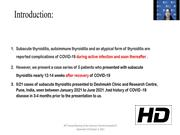
Introduction:
Coronavirus is known to affect various endocrine glands in the body, causing manifestations such as diabetes, pituitary dysfunction, and sick euthyroid syndrome. 1 We report a case series of five patients, who presented with post-COVID-19 subacute thyroiditis at our center.
Description:
We included five patients who presented to Deshmukh Clinic and Research Centre, Pune, India, between January 2021 and June 2021. All these subjects were men with average age of 38.6 years (32–53 years) and presented with neck pain (5/5), low-grade fever (4/5) of an average duration of 4 weeks. Goiter was present in 2/5. Diabetes and hypertension were present in 1/5. Thyroid tenderness was present in all, even in absence of goiter. Fatigue and weakness were present in 4/5 and 2 of them had weight loss of 8 and 15 kg, respectively. One patient had heat intolerance. All had history of COVID-19 before the aforementioned symptoms and had raised S. T3 and S. T4 with low S.TSH (average: 0.029 mIU/mL), raised erythrocyte sedimentation rate (ESR) (average: 26.4 mm/hour) and C-reactive protein (CRP) (average: 49.8 mg/lit). None of them had thyroid peroxidase positivity. Average duration between detection of COVID-19 infection and presentation with aforementioned symptoms was 12.8 weeks. COVID-19 was mild in one case (required home care), and moderate (hospitalized without oxygen or ventilatory support) in remaining 4/5. All patients responded well to oral prednisolone and thyrotoxicosis management. Average duration of prednisolone therapy was 2 months and average dose of prednisolone required was 6.8 mg per day. All recovered to euthyroid state with normalization of ESR and CRP in 2 months' time without any long-term thyroid sequelae.
Discussion:
Atypical thyroiditis has been reported during COVID-19 infection.
2
The “cytokine storm” produced during the same causes and aggravates autoimmune thyroid disease in addition to induction of nonthyroid illnesses with impaired thyroid function.
3
Our patients, however, presented with subacute thyroiditis nearly 12 weeks after COVID-19, which is known to cause systemic immune activation and thyroid inflammation, and hence may result in thyrotoxicosis or thyroiditis.
4
We, therefore, suggest that it is imperative to monitor thyroid function in COVID-19-affected patients, especially those presenting with throat pain or unexplained fever, long after occurrence of COVID-19.
Declaration:
Authors have received and archived patient consent for video recording/publication in advance of video recording of procedure.


Keywords
Get full access to this article
View all access options for this article.