






Abstract
Abstract
Introduction:
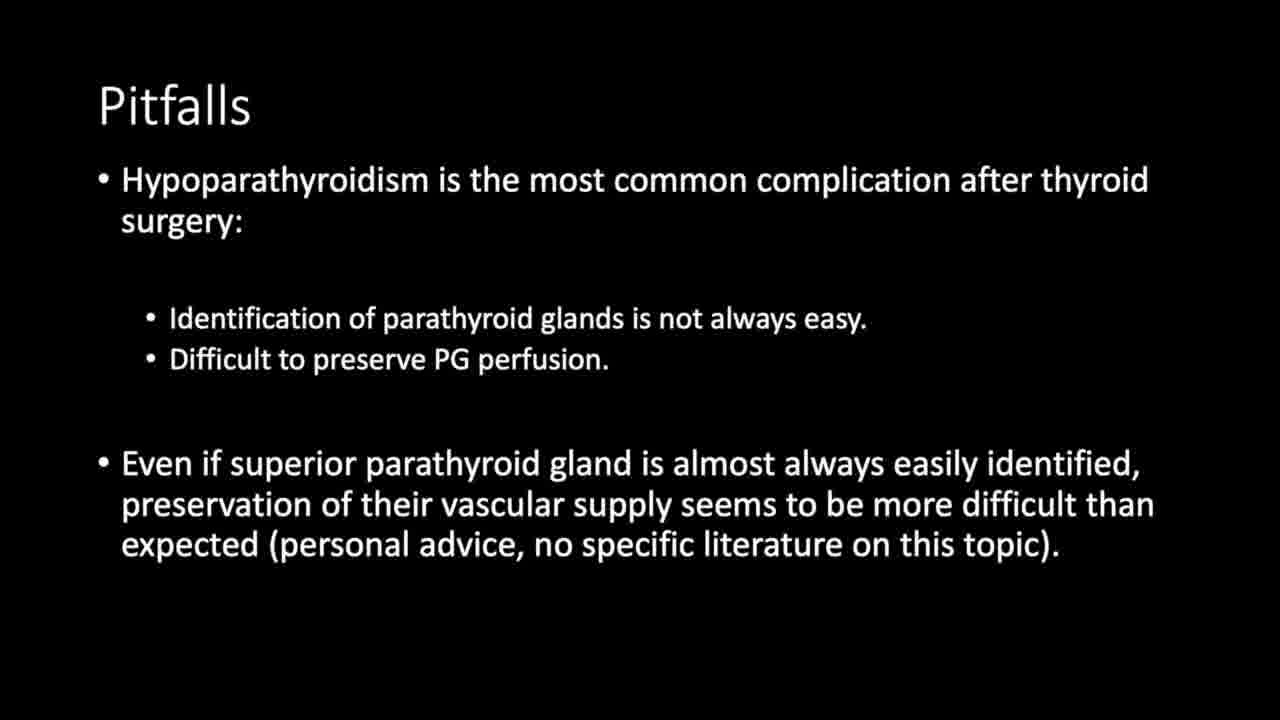
Remote approaches to thyroid have increased their frequency in endocrine surgery along in the past 10 years. Among all of them, transoral endoscopic thyroidectomy vestibular approach is probably the one performed most often in Asian countries. Although recently indocynanine green dye (ICG) fluorescence has been routinely used to identify prefusion of parathyroid glands (PG) and also to predict their immediate function after thyroidectomy, postoperative hypoparathyroidism rate, whether transient or permanent, seems to remain unchanged (10%–30%).
Methods:
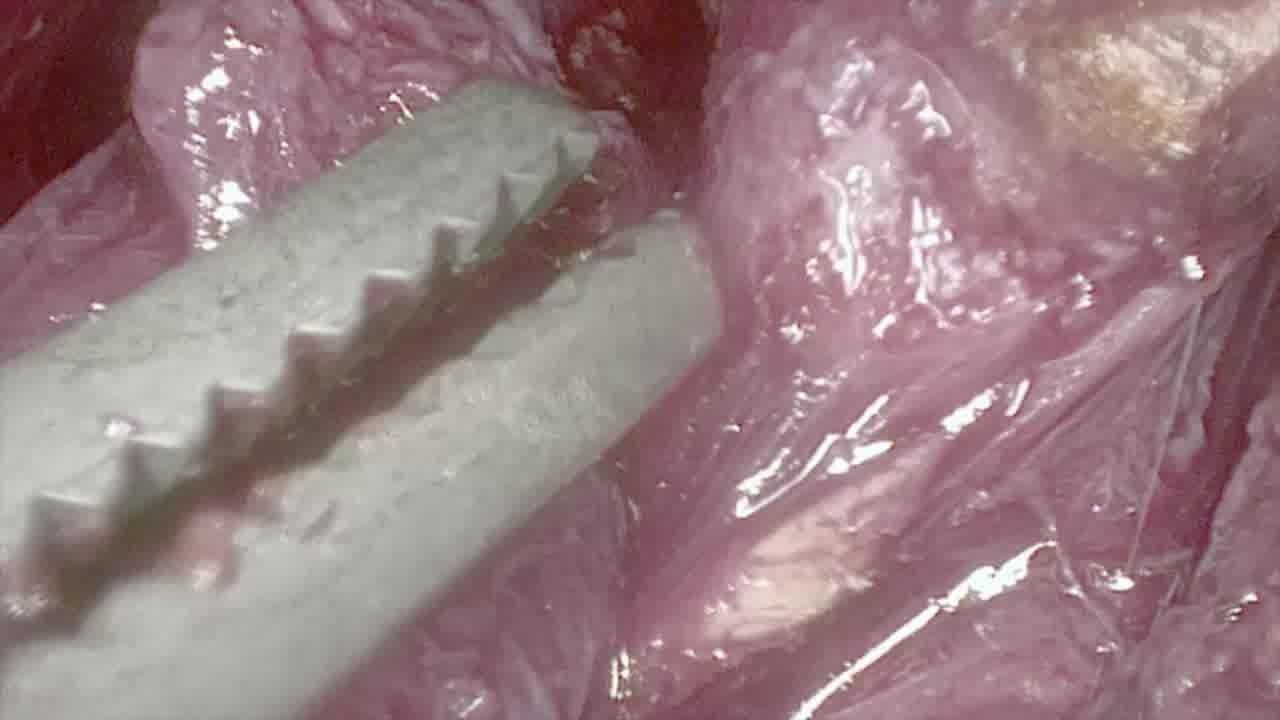
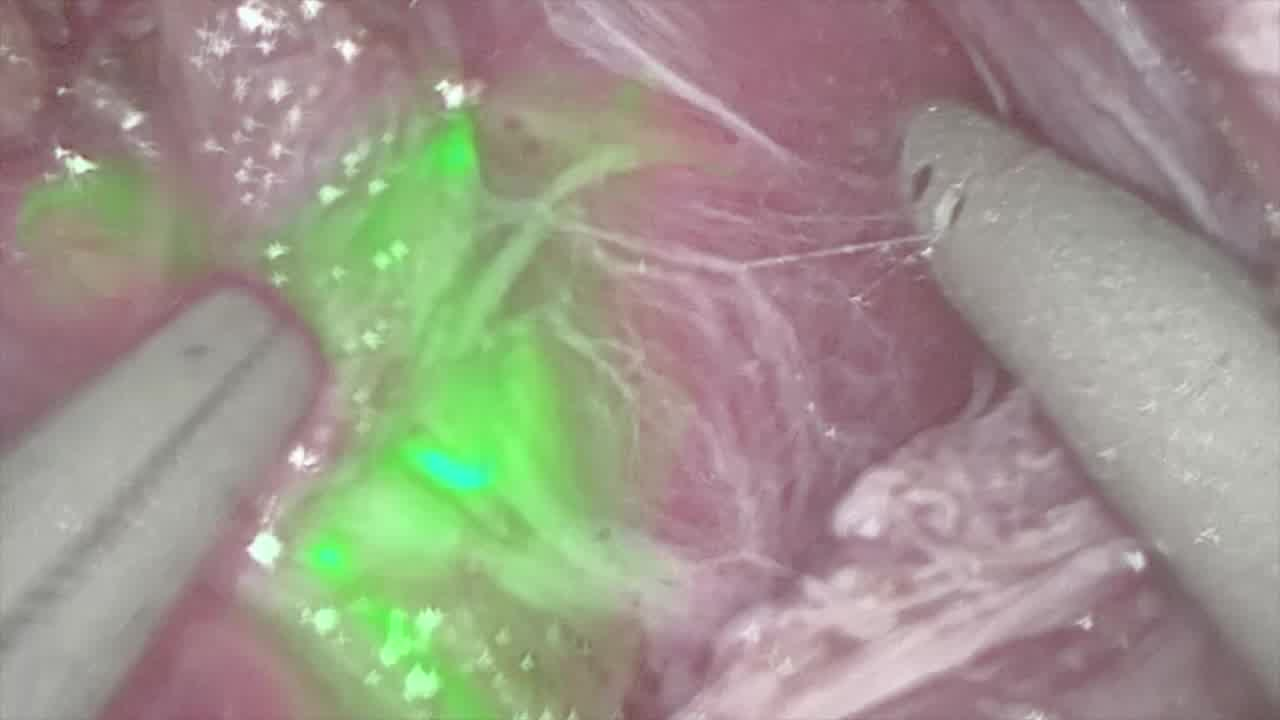
Three transoral cases are shown in which “Ele Vision” system has been used. Ele Vision (Medtronic, Inc., Minneapolis, MN) is a laser technology 785 nm: infrared light source and camera with microscope, and two image sensors to produce simultaneous white light and infrared fluorescence images, permitting autofluorescence identification of PG and the assessment of their perfusion after the injection of 2.5 mL of ICG without changing the endoscope. Surgeries had been carried on by the same senior endocrine surgeons. PG are observed in different color modes: red, black and white, or green; images shown had been chosen according to the best observation.
Results:
Superior PG were easily identified in all cases. As seen in Case 3 a tiny thyroid remnant was left attached to PG to preserve it. Regarding inferior PG, their identification was not possible in all three cases. As shown in the video, only inferior right PG was identified after lobectomy (Case 1). In Case 2 inferior PG was identified neither in the histologic specimen (probably located in-between the deep fatty tissue) nor afterward when further dissection was performed. Finally, in Case 3 the inferior PG was described to appear within the thyroid capsule (inadvertent parathyroidectomy). All patients did well immediately in the postoperative time and no hypocalcemia episodes occurred.
Conclusion:
Performing real-time fluorescence techniques for PG detection and perfusion assessment is feasible and potentially useful in remote approaches. More cases and studies are necessary to state the potential influence of autofluorescence and PG perfusion assessment in reducing posthyroidectomy hypocalcemia.
Authors have received and archived patient consent for video recording/publication in advance of video recording of the procedure.
Runtime of video: 7 mins 54 secs
This video was presented at the 4th symposium on parathyroid fluorescence 2022 in San Francisco.
Get full access to this article
View all access options for this article.