






Abstract
Abstract
Introduction:
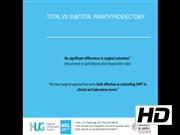
Secondary hyperparathyroidism (SHPT) is a common sequel of chronic kidney disease and is associated with increased cardiovascular mortality and morbidity. Parathyroidectomy is associated with an overall 28% reduction in all-cause mortality and a 37% reduction in cardiovascular mortality, 1 and seems to significantly improve the quality of life in hemodialysis patients. 2 Total and subtotal parathyroidectomy surgical approaches are both effective in controlling SHPT without differences in surgical outcomes.3,4 Near infrared autofluorescence (NIRAF) devices and indocyanine green (ICG) angiography are progressively gaining more interest in endocrine surgery.5,6 In case of subtotal parathyroidectomy, the naked eye distinction between well-perfused and nonperfused remnant could be challenging. In this video we present the different modality and informative contribution of the use of NIRAF device and ICG angiography in subtotal parathyroidectomy for SHPT in our institution.
Materials and Methods:
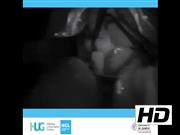
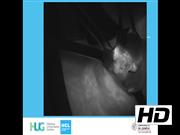
Different subtotal parathyroidectomies are shown. NIRAF and ICG angiography images are captured intraoperatively with Fluobeam® (Fluoptics©, Grenoble, France) in patients affected by SHPT. In all patients NIRAF was used to identify parathyroid glands (PGs) and a subtotal parathyroidectomy was performed after the assessment of the vascular perfusion of the candidate parathyroid remnant with ICG angiography.
Results:
In case of SHPT, thanks to the intrinsic autofluorescent pattern of the PGs, NIRAF device can help faster identification and confirm the nature of the PGs. After identification, ICG angiography could be a useful tool to discriminate the perfusion of parathyroid remnant in SHPT patients undergoing subtotal parathyroidectomy.
Conclusions:
NIRAF device and ICG angiography could be reliable adjuncts in case of subtotal parathyroidectomy for SHPT, respectively, to locate the PGs and to assure the vascularization of the PG remnant, possibly reducing the rate of postoperative permanent hypoparathyroidism. Further studies will be needed to validate this evidence.
Runtime of video: 8 mins 16 secs
Presented at the Third Symposium on Parathyroid Fluorescence (2021).
Keywords
Get full access to this article
View all access options for this article.