





Abstract
Abstract
Introduction:
Aesthetic outcomes related to scars are of significant concern to patients after surgery. Cervical scars after thyroid and parathyroid surgery are of special interest, given their prominent location on the anterior neck. Although some cosmetic concerns can be helped or even alleviated by careful incision placement in existing cervical folds, the long-term minimization of surgical scars is of great human interest. A wide variety of modalities for prevention and treatment of hypertrophic scars has been described in the plastic surgery and dermatology literature; however, there is no consensus on the optimal management of scars. 1 One such treatment modality is scar massage. Massage is thought to contribute to scar healing and minimization through mechanical disruption of fibrotic tissue, as well as effects mediated by stimulation of the peripheral nervous fibers, leading to muscle relaxation. In burn patients, multiple randomized control trials have demonstrated significant improvement in both visual scar characteristics and pruritus with scar massage, as compared with patients undergoing standard scar therapies such as application of moisturizing creams and pressure therapy.2,3 An additional study found similar results as well improvement in depression for patients who underwent scar massage performed by certified skin rehabilitation nurses and then their primary caregivers. 4 For almost two decades, it has been the practice of this endocrine surgery group to demonstrate and recommend routine self-massage of scars after cervical endocrine surgery.
Materials and Methods:
A high volume endocrine surgery group at a major academic hospital provides all patients with written instructions in scar massage upon hospital discharge, with verbal reinforcement and demonstration at the time of their first postoperative office appointment, typically 7–10 days after surgery. Patients are instructed to perform “vigorous daily massage for at least 6 months after surgery,” massaging “in all directions, basically all day every day.” They are shown how to do this, and are provided further verbal instructions if they seem doubting or uncomfortable. Patients are advised not to rely on the application of creams, lotions, vitamin E oil, and other commercial preparations. Use of sunscreen on the incision for 6 months when outside or tanning is recommended.
Results:
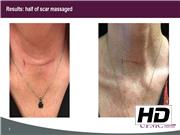
Massage was originally employed in our practice to treat selected patients with impressive subincisional tissue edema. Massage worked so well in this subset that we began to advise it more liberally, and were then beneficially struck with its cosmetic benefits. Over the next several years, it was observed that patients who routinely performed scar massage after endocrine surgery had such dependably improved aesthetic outcomes with regard to their cervical scars, it became the routine practice of our program. Anecdotally, the incidence of keloid has greatly diminished as well.
Conclusions:
Self-massage of cervical surgical scars is a low-cost and well-tolerated method for patients to improve aesthetic outcomes related to their scars after cervical endocrine surgery.
Runtime of video: 4 mins 34 secs
Get full access to this article
View all access options for this article.