





Abstract
Abstract
Introduction:
Neck hematoma is a rare but dreaded complication after thyroidectomy and has potential life-threatening consequences requiring emergent management. 1 The risk factors for developing neck hematoma have been studied on an international and multi-institutional basis. 2 Outpatient calls from patients concerned about possible incisional swelling occur considerably more often than does hematoma itself. In this setting, evaluation for possible neck hematoma can prove difficult, prompting costly visits to the emergency department for assessment, contributing to patient anxiety, and requiring urgent surgeon input day or night. In this article, we describe a novel, simple, and effective outpatient approach to the urgent evaluation of patient-reported neck swelling after thyroidectomy.
Materials and Methods:
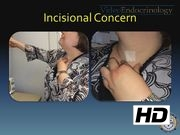
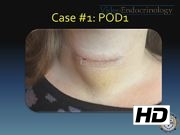
After total or reoperative thyroidectomy in our high-volume endocrine surgery program, patients are admitted overnight to the hospital, routinely examined for hematoma on evening rounds, examined again the following morning, and discharged if no evidence for neck hematoma is present. During discharge, patients also receive specific written and verbal instructions about when and how to notify the surgeon, should concern for incisional swelling develop at home. For this study, following institutional QI (QIIRB987) approval, when patients felt the need to call and report concern for incisional swelling, they were verbally evaluated by the attending surgeon per routine but were also asked to digitally capture and electronically transmit to the surgeon two cervical photographic images (front and lateral view) taken without patient identifiers, in accordance to institutional policies. These images were then immediately incorporated into the surgeon's assessment of the situation.
Results:
The management of six patients is described. Each patient underwent photographic assessment of reported new incisional swelling after total or reoperative thyroidectomy (five and one patients, respectively) on either the first or second postoperative day (mean interval 1.6 days, range: POD1–POD2). In all five cases, the electronic incisional appearance was found to be immediately accessible and HIPAA compliant and was loaded into the electronic medical record for documentation. In all five cases, there was found to be no significant swelling or hematoma present; timely reassurance was provided and further follow-up was conducted as required. Only one of the five patients required an emergency department visit to obtain images for transmission, at which time, multidisciplinary discussion and education were also facilitated. As experience increased with this technique, in-hospital images of mild incisional ecchymosis were obtained for two of the five patients before discharge and were loaded into the electronic medical record for possible later comparison, which proved useful in both cases.
Conclusions:
Remote incisional monitoring by personal electronic device can provide a rapid effective alternative to in-person physical examination when patients call with concern about postoperative incisional swelling. The technique offers immediacy, privacy protection, and convenience for patients and can also be used in an anticipatory way. It can also provide a frame of reference for discussion and recommendations to off-site healthcare professionals. Use of remote incisional monitoring may also potentially facilitate the assessment of other healing issues in the outpatient setting helping to reduce healthcare costs.
No competing financial interests exist.
Runtime of video: 8 mins 13 secs

Keywords
Get full access to this article
View all access options for this article.