





Abstract
Abstract
Introduction:
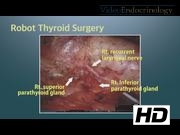
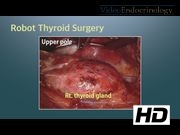
Recently, robot thyroid surgery is performed worldwide in thyroid tumors 1 and to reduce the surgical complication is also an important factor in robot surgery besides thyroidectomy.2–4 This video presents the surgical technique of preserving the recurrent laryngeal nerve and parathyroid gland in transaxillary robot thyroid surgery.
Materials and Methods:
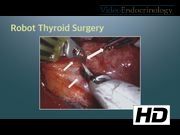
Robot thyroid surgery has a problem of not knowing how strong the surgeon is holding and retracting the tissues or feel the thermal change when energy device is activated. Dissection or manipulation should be performed by layers and structures. The surgeon should not advance to the next procedure immediately after activating the coagulating energy device when related to tissues for preservation since there could be a thermal injury. After the activation, pause or make contact to a gauze placed in the operative field to check the spread of remaining heat. The shielded side of the device should be placed to the remnant structure side. By doing so, the thermal spread could be minimized. When coagulating vessels, surgeon should not impatiently manipulate the grasped tissues since it could tear before fully coagulated and encounter bleeding. When preserving the recurrent laryngeal nerve and parathyroid gland, these surgical tips are very important to minimize the injury.
Results:
By applying such surgical techniques, the result of preserving the recurrent laryngeal nerve and parathyroid gland is safe and secure in robot thyroid surgery 5 as presented in our video.
Conclusion:
Endocrine surgeons are to perform functionally safe thyroidectomy and reduce the surgical complications in any types of thyroid surgery. Above-mentioned techniques will help preserve the recurrent laryngeal nerve and parathyroid gland in robot thyroid surgery.
Runtime of video: 4 mins 57 secs
Get full access to this article
View all access options for this article.
References
Supplementary Material
Please find the following supplemental material available below.
For Open Access articles published under a Creative Commons License, all supplemental material carries the same license as the article it is associated with.
For non-Open Access articles published, all supplemental material carries a non-exclusive license, and permission requests for re-use of supplemental material or any part of supplemental material shall be sent directly to the copyright owner as specified in the copyright notice associated with the article.
